• Home
  • About
  • Bernini
  • Book Reviews
  • Things I Love
  • Fun Facts
  • Contact Me

Searching For Bernini

~ Musings on the Ecstasy of Italian Art and Culture

Searching For Bernini

Tag Archives: Gianlorenzo Bernini

Secrets of Piazza di Spagna—Part I

03 Friday May 2013

Posted by SearchingForBernini in Italian Life, Politics

≈ 7 Comments

Tags

architecture, Federico Zuccari, Gianlorenzo Bernini, Italy, Piazza di Spagna, Roman, Rome, secrets of rome, Spanish Steps, Travel, Trinità dei Monti, Vatican City

Statues talk, humans are available to rent,
and sometimes doorways scream…
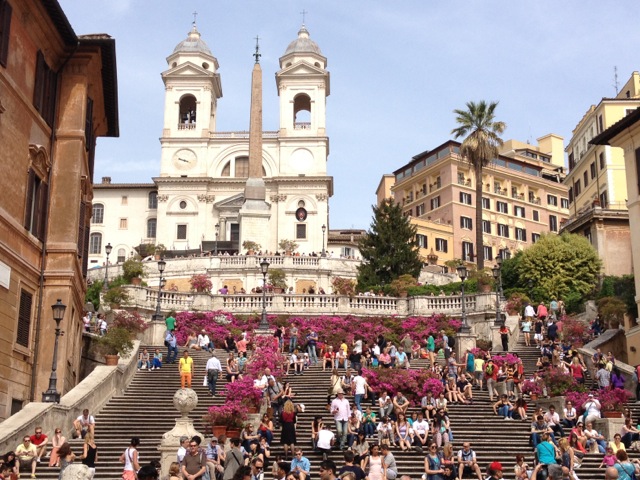
The Spanish Steps

The Spanish Steps

There’s so much to learn in Rome that it can be intimidating when I think about all I don’t know. But as the Italians tell me so often, especially when I stress out about not being able to speak, “Piano, piano!” Slowly, slowly….

So, every chance I get to absorb some new info about the city and its history I’m grateful, and concentrate fiercely on trying to remember it all.

After Italiano class one day this week, my school, Italia Idea, offered a two-hour walking tour around the neighborhood where it’s located, near the famous Piazza di Spagna. Our guide, Paolo, is one of the teachers and an official tour guide (in Italy, becoming a registered tour leader isn’t easy; it requires taking difficult oral and written exams).

It turns out Paolo has studied the works of my 400-year-old boyfriend, Gian Lorenzo Bernini, and seems as fascinated with his art and flamboyant personality as I am. So, here are some of the secrets of Rome I learned from Paolo on our tour, conducted in Italiano. On a warm spring day, we started off east of the Steps and wound up a cobblestone street, Via Gregoriana, to a look-off point on a hill above where an interesting palazzo sits…
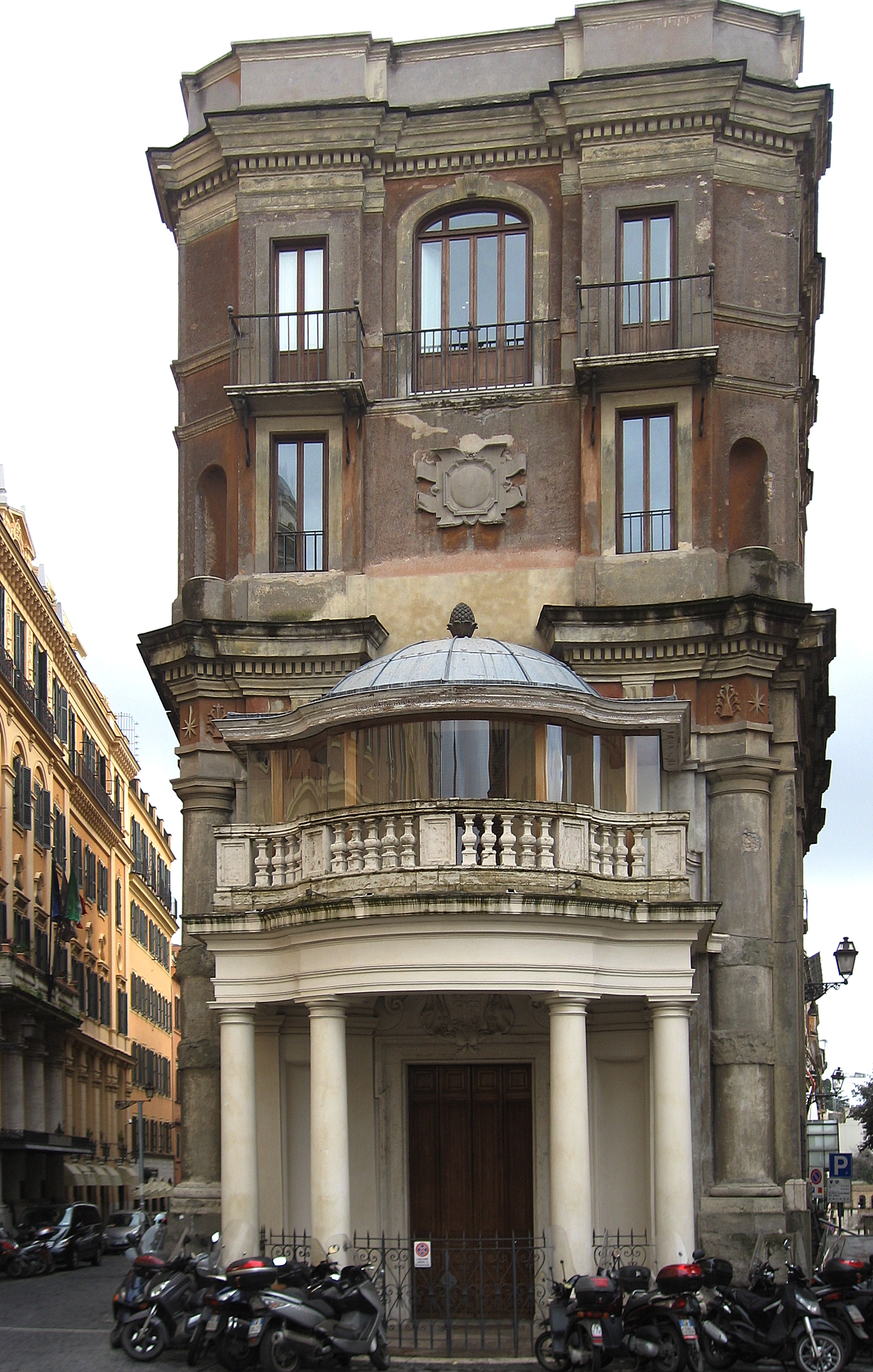
Palazzo Zuccari (photo by Manfred Heyde)

Palazzo Zuccari (photo by Manfred Heyde)

1. The walls have ears, and here the doorways scream. The Palazzo Zuccari is an odd building designed at the turn of the 16th century by Federico Zuccari, an artist from Urbino (his frescos can be found in the Santa Maria del Fiore church). He built the palazzo to celebrate artists. Looking at the building from the front it seems a nice, old palace. It changed hands several times and during the mid-1600-1800s—the period when upper class Europeans took a Grand Tour—it became an inn that hosted artists like Joshua Reynolds and Jacques-Louis David.

Paolo informed us that the palazzo originally had an amazing view across what were rolling hills and gardens that descended down to what is now the Piazza di Spagna. Where this palazzo gets a little odd, however, is when you walk around and look at the side of the building, where an entrance and a couple of windows are framed by screaming, open mouths.
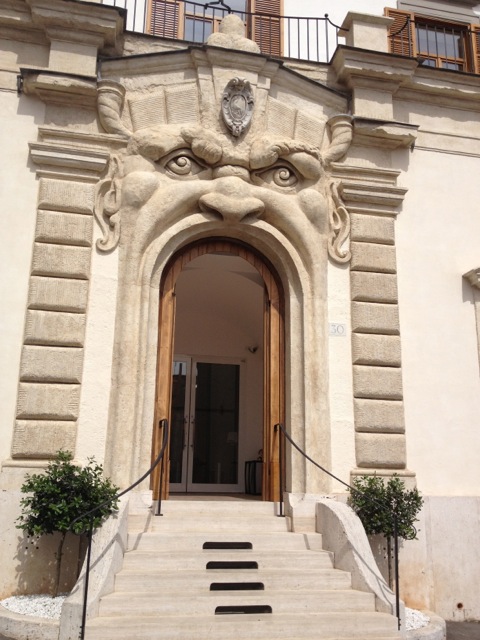
Palazzo Zuccari's screaming door.

Palazzo Zuccari’s screaming door

Apparently these were meant to intimidate visitors so they knew that entering the palazzo was an important act, and not to be taken lightly. Zuccari had used a similar depiction years before to evoke Dante’s doors to Hell. Welcome! Come on in! (Or, actually, don’t, unless you’re a top-level German scholar specializing in Italian and Roman art of the Renaissance and Baroque periods who’s won an exclusive fellowship to study at the Hertzian Library, which is now housed there.)

2. The Spanish Steps are both “modern” and “natural.” At least that’s how Paolo describes them—and when a country’s history extends back more than 2000 years, steps built in the 1700s seem new. From the Palazzo, we walked by the Trinità dei Monti church and started down the Spanish Steps.
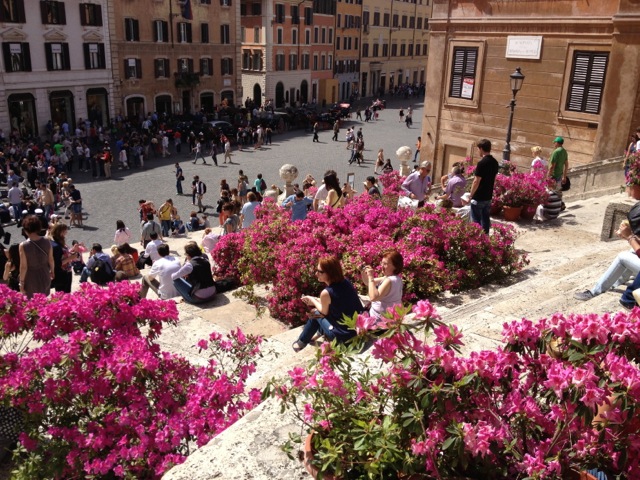
Walking down the Steps

Walking down the Steps

In the 15th and 16th centuries, the area around what is now Piazza di Spagna was considered the center of Rome. There were a few bustling streets where commerce happened, and the area was home to several grand palazzos, surrounded by countryside or gardens. What we know as the Spanish Steps didn’t exist until the 1720s, when they were built to follow the natural flow of the land and hills around the piazza. They were meant to be organic and naturalistic, a favorite theme of the Baroque. So if you really look at the steps, all 138 of them, you can see how the architect, Francesco de Sanctis, designed them to flow down the hill from Trinità dei Monti, following the shape of the land. At different points of the year, the steps are covered in flowers—today the Bougainvillea is bountiful.
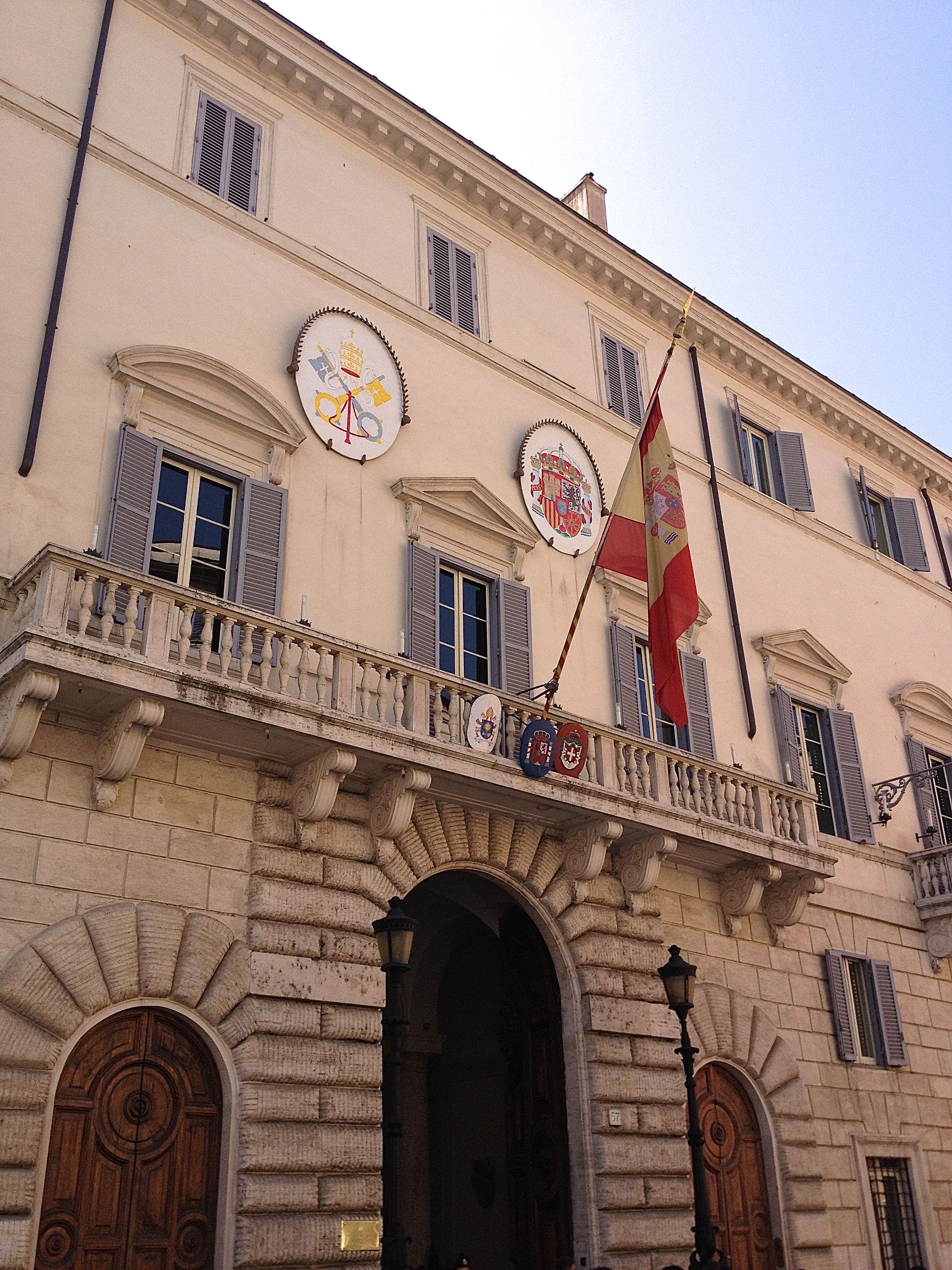
Palazzo di Spagna

Palazzo di Spagna

3. Rome is a dual capital. More Italian politics: Rome is not only the capital of Italy, it is also the capital of Vatican City. The church is its own city-state. In fact, it’s the smallest internationally recognized independent state in the world. And as Paolo informed us, all countries with representatives in Rome actually have two embassies, one for Italy and one for the Vatican. One of the palazzos in the square is the Spanish Embassy to the Holy See, and it’s from the embassy that the piazza takes its name. In the 17th century, the area around the embassy was considered Spanish territory.
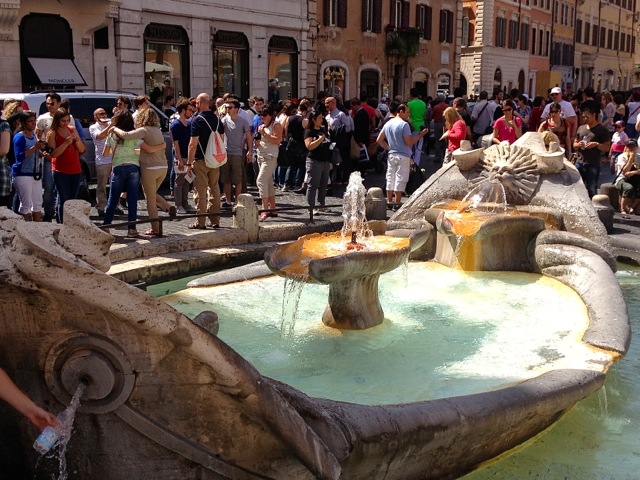
Fontana della Barcaccia

Fontana della Barcaccia

4. That boat fountain tells a true story. Bernini first learned to sculpt at the feet of his father, Pietro Bernini. Pietro earned a commission from Pope Urban VIII to create the Fontana delle Barcaccia in the middle of the Piazza. Bernini the Elder reportedly took his inspiration from the flooding of the Tiber in 1598 (incidentally, the year my Bernini was born), when a small boat actually did get stranded in the area.

Caravaggio's Martha and Mary Magdalene

Caravaggio’s Martha and Mary Magdalene

5. Human models were available for rent. Models here! Get your models here! The area around Piazza di Spagna was a kind of Soho of its time: Artists of all types lived and worked here at different times—John Keats died in the building to the right of the Steps in 1821, and it’s now a museum dedicated to him and Percy Bysshe Shelley. In the 16th and 17th centuries, young Romans would stand in the piazza hoping to be hired by artists who needed people to pose for them. I love the idea of gorgeous, young Italians sucking in their cheeks and flaunting their beauty just waiting to be immortalized by Caravaggio or even Bernini (although I think he was his own favorite model). In fact, the reason many of the faces look alike in different Renaissance artists’ paintings is probably because the artists hired the same models. Oops! I wonder if they got into fights: “Hey, you stole my Virgin Mary!”

6. Talking statues. No, not the models I mentioned above. Throughout Rome, and on our walk we passed by the Café Canova Tadolini at 150 Via Babuino. (I’ll check out the restaurant in future—you eat among the statues.) Outside, sits a statue that perhaps gave the street (Babuino means baboon) its name, because the reclining figure ain’t so pretty.

Talking Statue on Via del Babuino

Talking statue on Via del Babuino

The statue is one of several around Rome where citizens would come to leave notes complaining about things they would never be able to out loud: “My taxes are too high!” “The Pope doesn’t give us enough bread!” Back in Bernini’s time (and before…and after), Romans had to guard their tongues (see my earlier post on “dissimulation”). If they spoke against the Church openly, the punishments were harsh and sometimes deadly. But these statues provided one outlet for the frustrated to voice complaints—and so they were called talking statues.

Stay tuned for Part II of the walk around the Piazza di Spagna….
Share this:

  • Click to email a link to a friend (Opens in new window) Email
  • Click to share on X (Opens in new window) X
  • Click to share on Facebook (Opens in new window) Facebook
  • Click to share on LinkedIn (Opens in new window) LinkedIn
  • Click to share on Tumblr (Opens in new window) Tumblr
  • Click to print (Opens in new window) Print
  • Click to share on Pinterest (Opens in new window) Pinterest
Like Loading...

What a Mess! Understanding Italian Politics (Or Trying To)

20 Saturday Apr 2013

Posted by SearchingForBernini in Politics, Uncategorized

≈ 2 Comments

Tags

Barack Obama, Beppe Grillo, Gianlorenzo Bernini, Giorgio Napolitano, Hillary Clinton, Italy, jorge mario bergoglio, la repubblica, Pier Luigi Bersani, politics, Politics of Italy, President of Italy, Rome, Silvio Berlusconi, United States

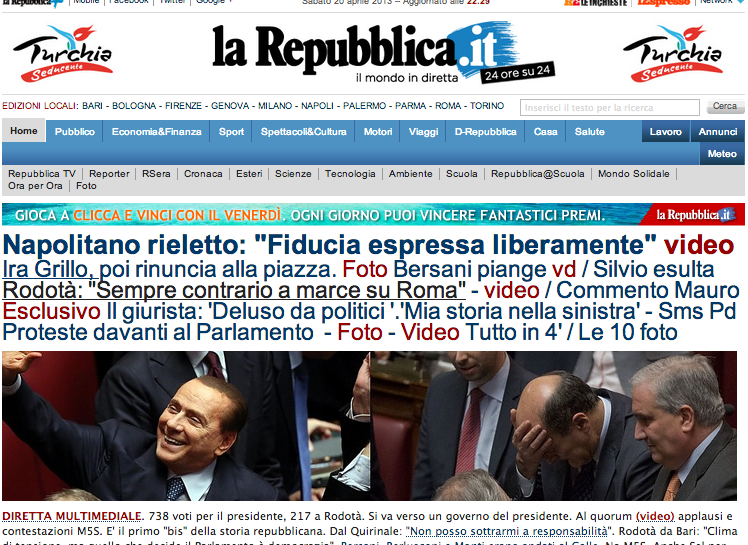
La Repubblica Website April 20, 2013

La Repubblica Website April 20, 2013

Bernini would probably shrug and say, “Eh? Che ci voi fare?”

Just before I arrived in Italy earlier this month, the country held an election that ended in chaos. From what I understand (and it’s no simple task to comprehend the machinations of Italian politics), no candidate or party received enough votes to win the majority, and so Italy hasn’t had a functional government for two months. (Yes, it took only two days to elect Jorge Mario Bergoglio as the new pope, but a new head of state is another matter.)

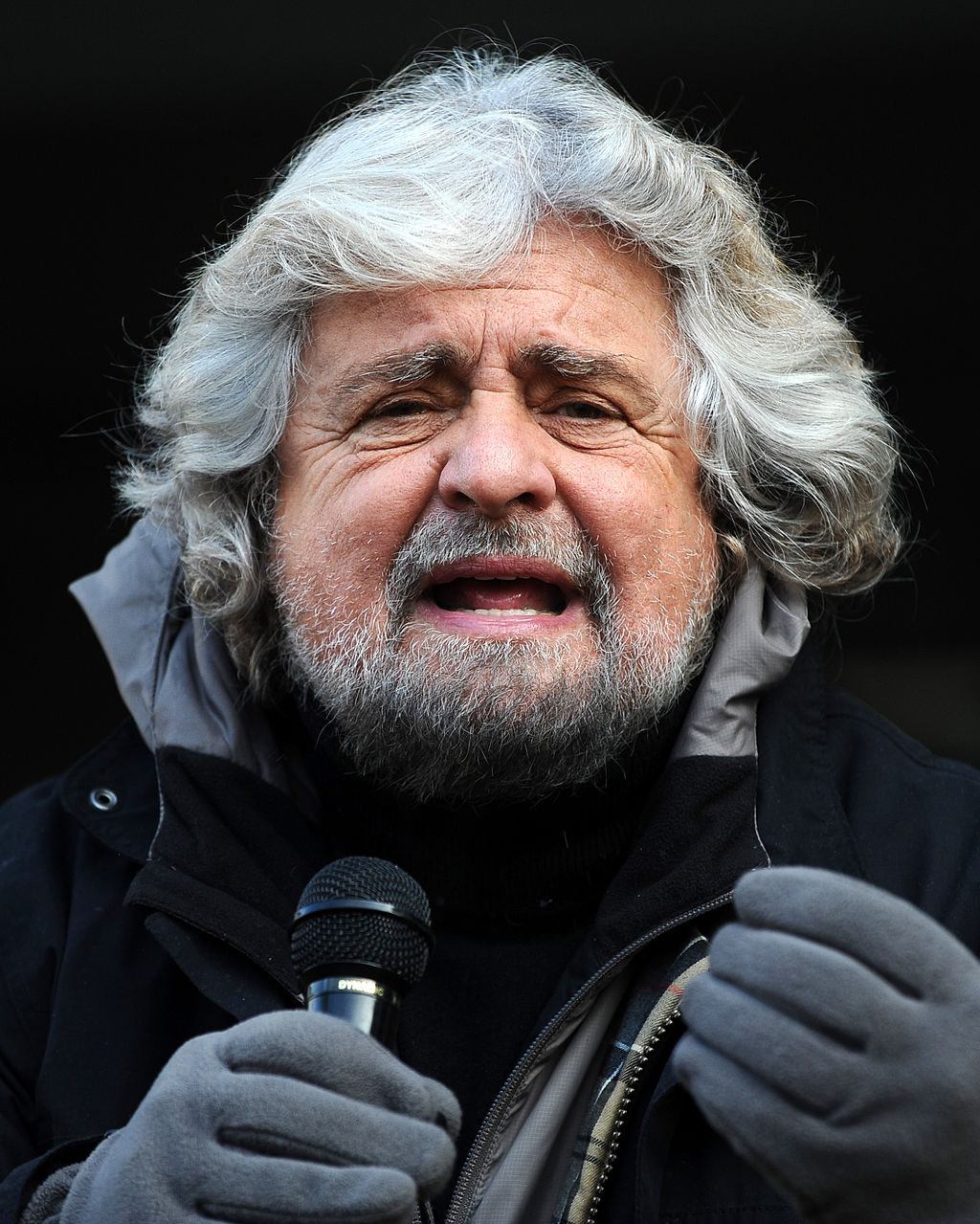
 Beppe Grillo on the tribune of the Five Star Movement at Piazza Dante in Trento during the collection of signatures for the presentation of the lists for the political elections in 2013. (by Niccolò Caranti)

Beppe Grillo on the tribune of the Five Star Movement at Piazza Dante in Trento during the collection of signatures for the presentation of the lists for the political elections in 2013. (Photo by Niccolò Caranti)

I’m not going to pretend to be any kind of expert on this, so please forgive any errors, but here’s my attempt to figure out what the heck is going on.

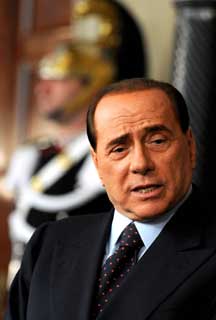
An “Occupy Wall Street”–like anti-establishment group, the Five Star Movement, headed by comedian/actor Beppe Grillo, won a quarter of the votes in the election, and super-sleazemeister Silvio Berlusconi, incredibly, is still oozing and schmoozing around with his center-right coalition (called the People of Freedom…seriously).

Berlusconi (© Presidenza della Repubblica)

Berlusconi (© Presidenza della Repubblica)

This week, 1,007 electors in Parliament voted to pick a president, which apparently, in Italy, is kind of a ceremonial position. The real power of the government rests with the prime minister (most recently Pier Luigi Bersani, who resigned, so as of now there is none). The governmental process here is going just about as smoothly as the recent U.S. Senate non-vote on stricter background checks for gun buyers.

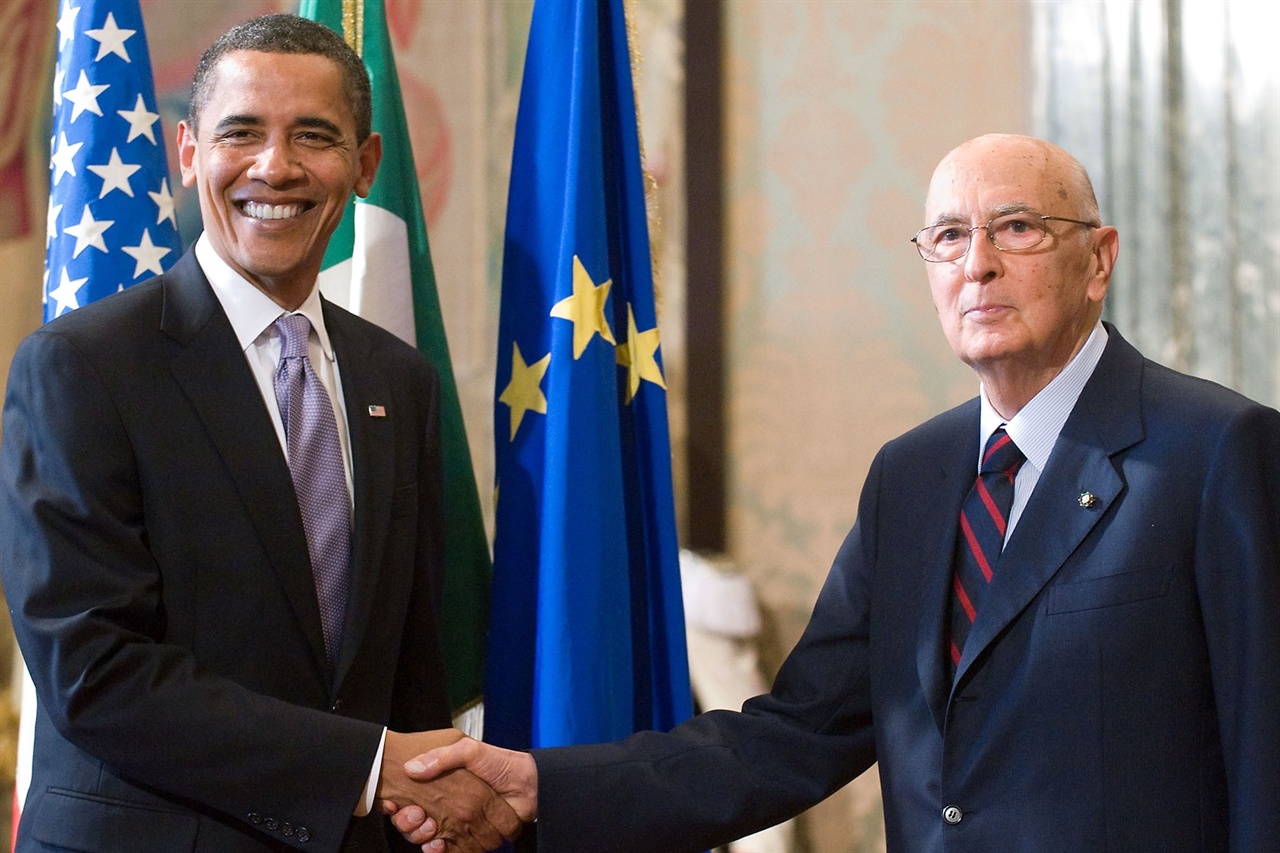
Obama and Napolitano

Obama and Napolitano

Today, on April 20, the vote stumbled through its third day; a number of candidates had withdrawn; some lawmakers had declined to vote or said they’d cast empty ballots in protest; and more than 100 lawmakers from the center-left refused to recognize their own candidate. The newspapers here said the country is “suspended in a void.” Ma aspetti! (But wait!) As I’m writing this, (almost 88-year-old) Italian president Giorgio Napolitano agreed to run again: Once more unto the breach! And he got elected. But what does that mean? (He was named a Life Senator in 2005, so, maybe now he’s a Life President.) Um….

During all of this, I’ve had several charged political conversations (or attempts at conversation, in Italiano) with my language teacher, Eva, at I Love IT school in Orvieto. She tried to give me some insight into Italian politics through the years after she pulled out magazine pictures of Berlusconi and Barack Obama for us to discuss as a speaking exercise.

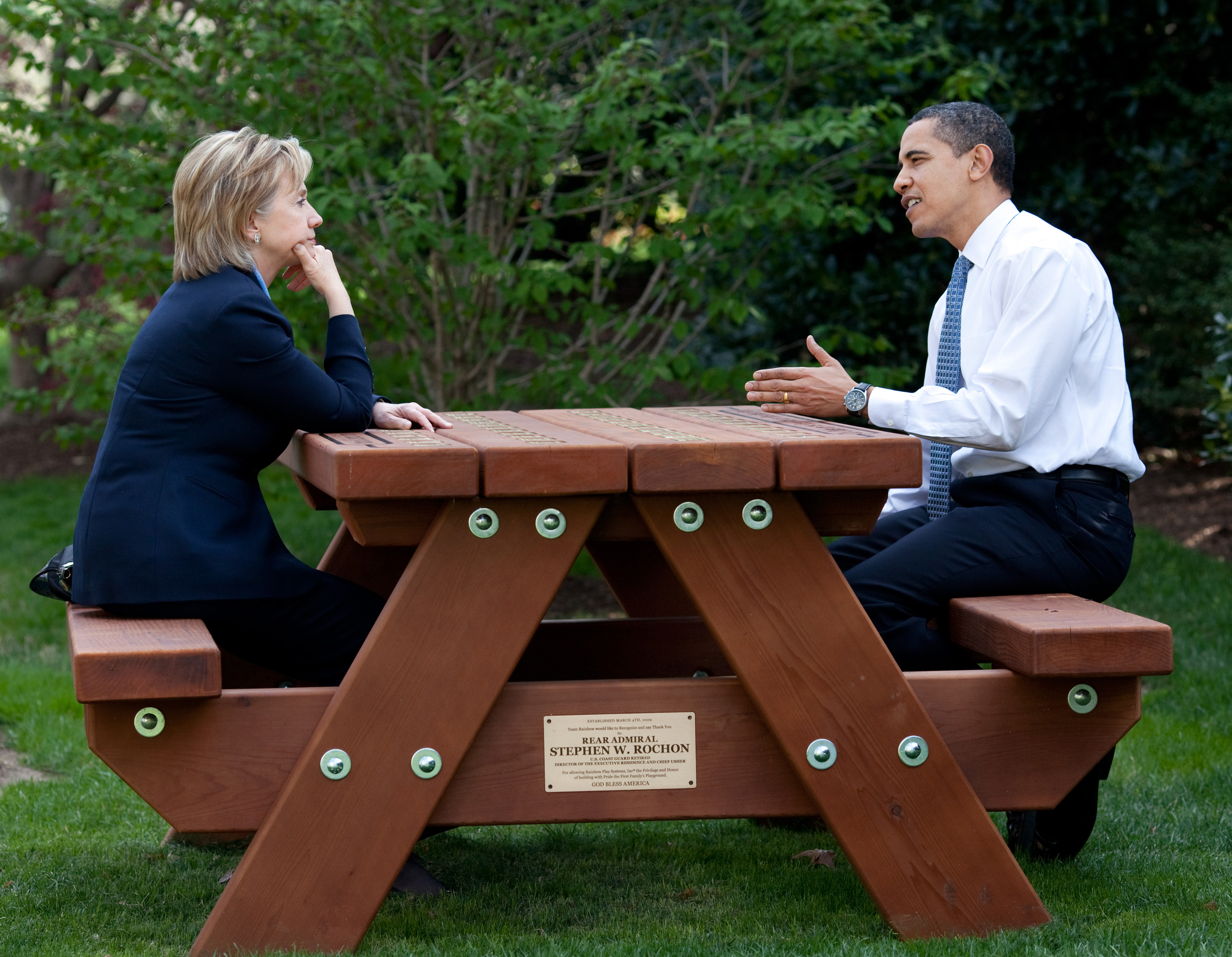
President Barack Obama and Secretary of State Hillary Rodham Clinton speak together sitting at a picnic table April 9, 2009, on the South Lawn of the White House. Official White House Photo by Pete Souza

President Barack Obama and Secretary of State Hillary Rodham Clinton speak together sitting at a picnic table April 9, 2009, on the South Lawn of the White House. Official White House Photo by Pete Souza

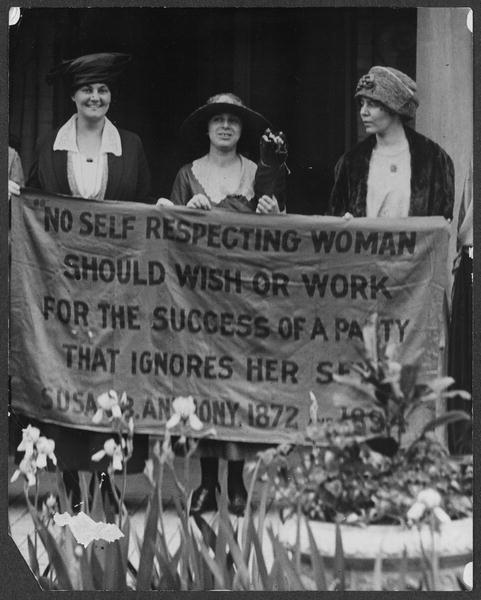
I stated that while it’s great that America elected an African-American president, I hoped that Hillary Clinton would decide to run in 2016. I told Eva I wasn’t surprised that we, in America, elected a black man before we elected a woman president—after all, black men got the vote in 1869, long before women—of any color—did in 1920. And I sincerely hope it won’t be 50 years before we elect a woman president.

Suffragists at the 1920 Republican convention.

American suffragists at the 1920 Republican convention.

Eva pointed out that Italian women couldn’t vote until 1946, when the end of World War II prompted the decision by the interim government (after the fall of Mussolini and Fascism) to hold a nationwide vote (introducing universal suffrage for the first time). Mussolini_wine

Italian provinces were united in 31 constituencies, each electing a group of candidates. Along with the election, voters were asked to decide if they wanted the country to become a true republic, or if they favored the return of a monarchy and Umberto II of Savoy, the last king of Italy.

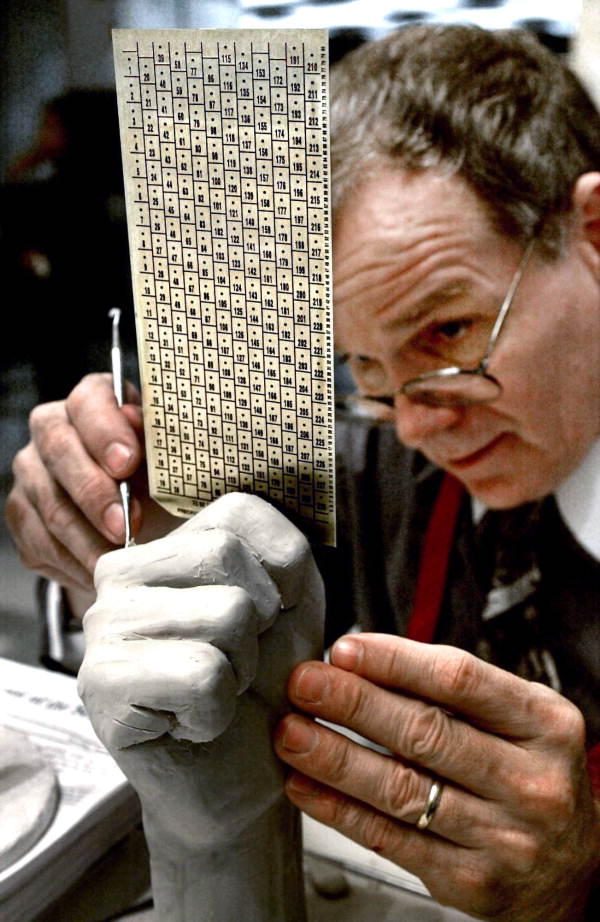
Hanging chads in Florida during the presidential "election" 2000.

Hanging chads in Florida during the presidential “election” 2000.

Northern Italy voted for a republic. Southern Italy voted for a monarchy. According to Eva, the Republic won the referendum because votes from Sicily (aka the home of the Mafia), which would have tipped the decision over to the monarchists, mysteriously didn’t make it to Rome in time to be counted. (Hanging chads, anyone?)

At any rate, Italy became a democracy with elections held, er…every so often. Technically, members of parliament serve a maximum of five years. But a president (or maybe a prime minister?) can dissolve parliament and hold new elections if he chooses. Capisci? I don’t!

But ever since the February election ended essentially in a draw, the lawmakers have been haggling over whom to elect as president. Now that Napolitano has stepped up, who will be prime minister? And who’s really calling the shots? Uh….

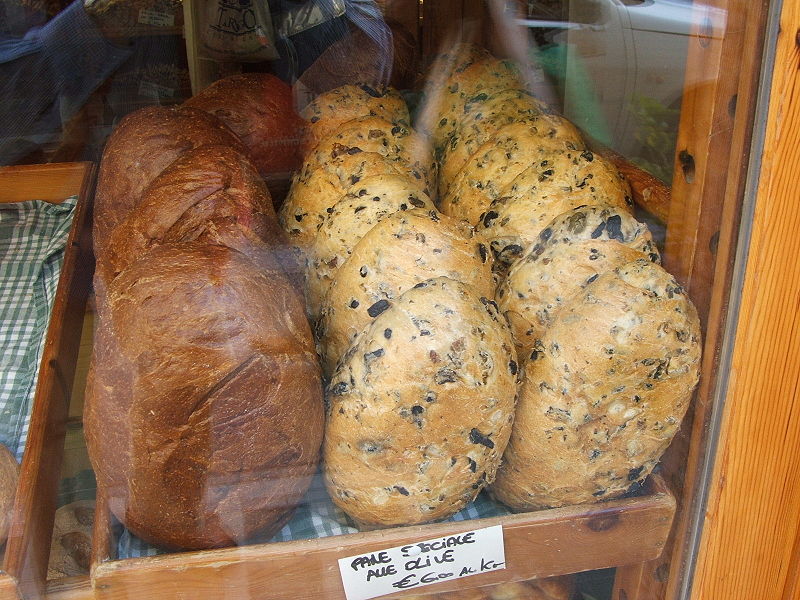
Italian bread

Italian bread

Of course, things weren’t any better in Gian Lorenzo Bernini’s day, when the Popes ruled like royalty and the church’s power kept the people dependent on them, even for loaves daily bread. Voting by the people? Fuhgeddaboudit!

So, what did I discover during my search to understand Italian politics? In a week during which I read numerous articles and Facebook posts about the mess in Washington, D.C.—about how the U.S. Congress remains clutched in the grip of the NRA and won’t choose the sane path regarding stricter gun control (and that’s only the latest in a painfully long list of non-action and partisan rifts)—I learned, as someone who is trying on a new country for size, that there is a place like home. Governmental dysfunction seems to be universal.

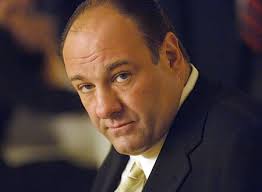
As Tony Soprano—or Bernini—might have said, “Che ci voi fare?” (What are you gonna do?) Ciao!

Tony Soprano

Tony Soprano

Share this:

  • Click to email a link to a friend (Opens in new window) Email
  • Click to share on X (Opens in new window) X
  • Click to share on Facebook (Opens in new window) Facebook
  • Click to share on LinkedIn (Opens in new window) LinkedIn
  • Click to share on Tumblr (Opens in new window) Tumblr
  • Click to print (Opens in new window) Print
  • Click to share on Pinterest (Opens in new window) Pinterest
Like Loading...

Dissimulation: An Italian Tradition?

12 Friday Apr 2013

Posted by SearchingForBernini in Italian Life, Orvieto

≈ 1 Comment

Tags

Baroque, Bernini, Gianlorenzo Bernini, Giordano Bruno, Italian, Italy, Orvieto, Paolo Sarpi, Rome, Travel

Venetian Carnival Mask Venetian Carnival Mask

“I wear a mask, and indeed must do so, for without it no one could live safely in Italy.”—Paolo Sarpi

While enjoying an aperitivo on Orvieto’s Corso the other night, I ran into my friend Toni DeBella, who was chatting with some visiting Americans—a very cool couple, Benjamin Orbach and Ashley Kushner. (Ben is the director of America’s Unofficial Ambassadors, dedicated to increasing the number of Americans who volunteer in the Muslim world, and author of Live From Jordan; Ashley works for the State Department.)

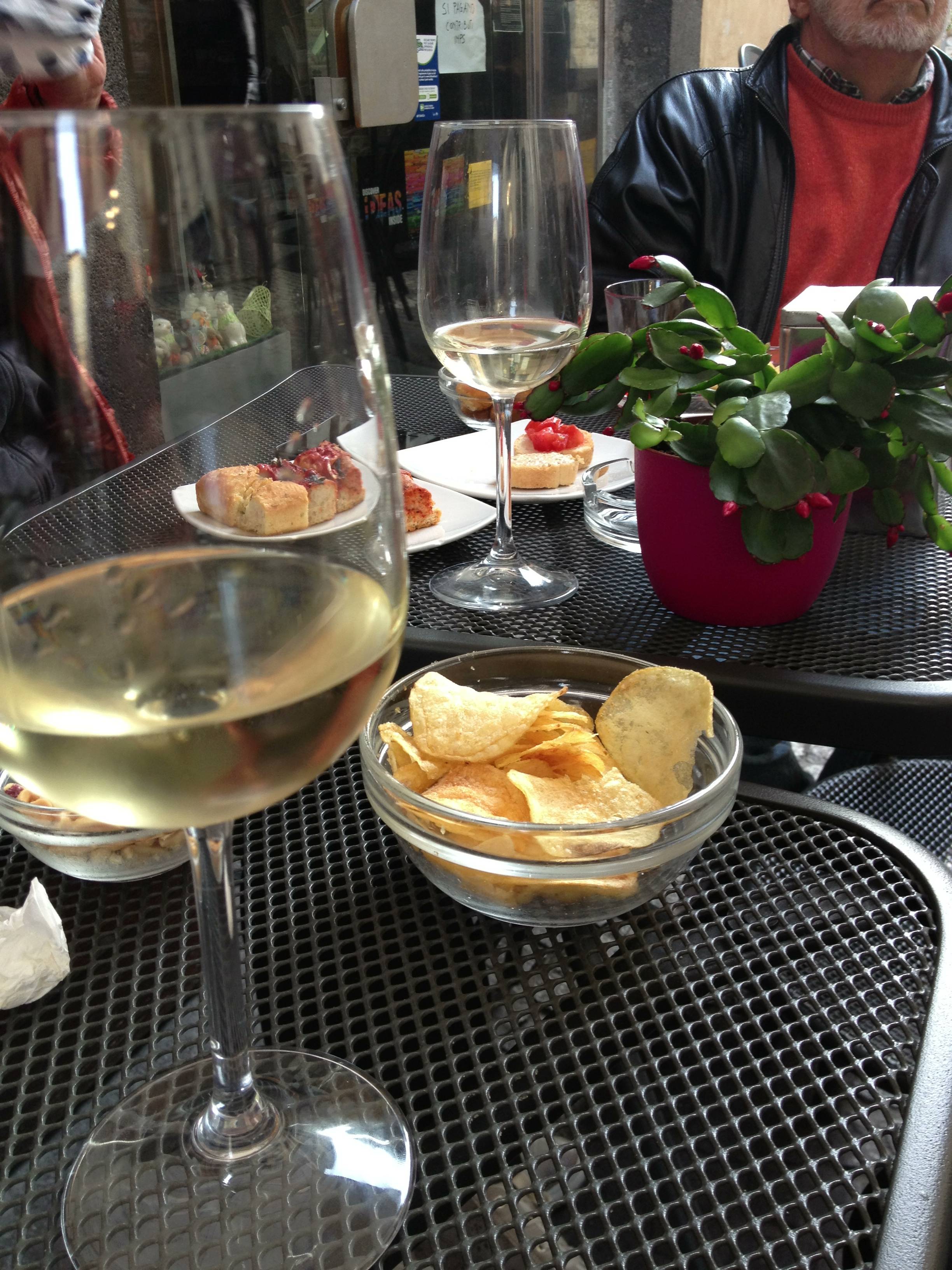
vino Over a glass of vino and several small dishes of complimentary snacks (gotta love that Italian tradition), we talked about their work and time they’d spent living and working in Israel. Toni described to them a situation in Italy that has frustrated an Israeli friend of hers, who lives in Rome. “The Italians won’t just come out and say something straight to the point,” her friend has complained. “They talk ’round and ’round and you never get a straight answer or opinion.”

Welcome to the land of dissimulation. Webster’s defines the word as “hiding under a false appearance.” Apparently Romans practiced it in Bernini’s day—the 17th century—as well, and probably long before then.

ttp://searchingforbernini.com/wp-content/uploads/2013/04/book.jpg”> Bernini biography

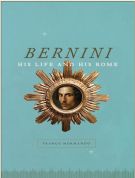
[/caption]My Italian isn’t yet good enough, and I haven’t had enough time here to experience this myself, but as I was reading a biography of my 400-year-old boyfriend, Bernini: His Life and His Rome (by Franco Mormando, Univ. of Chicago Press, 2011) in bed that night, I came to a section called, “I Beg You To Dissimulate,” and it explains what Toni’s friend has been up against.

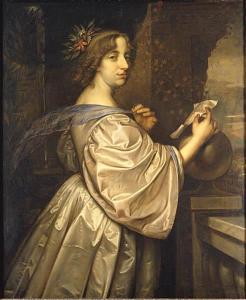
//searchingforbernini.com/wp-content/uploads/2013/04/drottning_kristina_av_sverige.jpg”> Chistina, Queen of Sweden from 1633-54

Mo

[/caption]Mormando writes that Queen Christina of Sweden, one of Bernini’s powerful friends, said, “To be unable to dissimulate is to be unable to live.”

In the courts of Europe, and especially in Vatican-controlled Rome, no one would say what they really thought or meant for fear of harsh reprisals (in 1600, Italian philosopher Giordano Bruno was burned at the stake in the Campo dei Fiori for his opinions). There were even treatises published about the art of hiding your true meaning: “On Honest Dissimulation,” writes Mormando, was “the Baroque handbook par excellence on the art of survival in an age of divine-right, absolute (but nonetheless insecure and paranoid) government.” That’s going on my list for my “Searching for Bernini” quest! (See About.)

chingforbernini.files.wordpress.com/2013/04/galileo-arp-300pix.jpg”> Galileo

The risk

[/caption]The risks of speaking one’s mind, especially if it went against the general consensus of the times, were great: Galileo was one famous victim—What? You say the world revolves around the sun? Basta! To jail with you!

And think of the Inquisition. So thinkers and artists, like Bernini, who dealt with powerful, rich patrons, had to guard their tongues. One wrong word could destroy a career or even end a life. So Bernini learned to keep his true opinions to himself.

He was a master of deception in his art, as well—hiding how difficult it actually was to make marble look as pliable as flesh. His deception in his work resulted in an appearance of effortlessness.

But regarding speech, Mormando quotes from The Life of Gian Lorenzo Bernini, by the artist’s son, Domenico, who wrote, “When it was not possible to praise a work [of art, Bernini] preferred to remain silent. When it was absolutely necessary for him to comment about a painting, he found ways to say nothing even while saying something.”

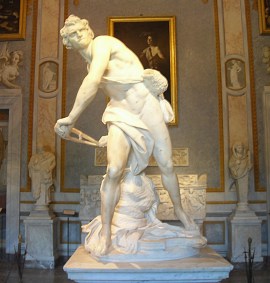
rnini.files.wordpress.com/2013/04/david_bernini_1623.jpg”> Bernini’s David, biting his lip (instead of his tongue!)

Ecco la! There you

[/caption]Ecco la! There you have it: Toni’s friend was merely experiencing a true Italian tradition, part of a long cultural history in which the wrong word could wind up sending the speaker to jail, or worse. In Rome today that wouldn’t happen (although I wouldn’t cross the mafia dons just to find out), but the art of the practice—like Bernini’s own works—hasn’t been forgotten. Che ci voi fare? (What are you gonna do?). Just go with it. And have pazienza!

Share this:

  • Click to email a link to a friend (Opens in new window) Email
  • Click to share on X (Opens in new window) X
  • Click to share on Facebook (Opens in new window) Facebook
  • Click to share on LinkedIn (Opens in new window) LinkedIn
  • Click to share on Tumblr (Opens in new window) Tumblr
  • Click to print (Opens in new window) Print
  • Click to share on Pinterest (Opens in new window) Pinterest
Like Loading...
Newer posts →

Search

Recent Posts

  • Hot Lincoln
  • Rome for Cat Lovers
  • Happy Valentine’s Day…
  • Caravaggio’s Whores: The Courtesans of Rome Part II
  • Bernini’s Torrid Love Life

Recent Comments

SearchingForBernini's avatarSearchingForBernini on Sobbin’ Women: Sicilian…
Anna Marie's avatarAnna Marie on Sobbin’ Women: Sicilian…
The Art ofRheumatoid… on Caravaggio’s Whores: The…
Finding Treasure… on Caravaggio’s Whores: The…
Finding Treasure… on The Courtesans of Rome: Part…

Archives

  • March 2019
  • June 2016
  • February 2016
  • November 2015
  • October 2015
  • May 2015
  • April 2015
  • March 2015
  • November 2014
  • July 2013
  • June 2013
  • May 2013
  • April 2013

Topics

  • Art
  • Art History
  • Bernini
  • Book Reviews
  • Books
  • Caravaggio
  • Fun Facts
  • History
  • Italian History
  • Italian Life
  • Music
  • Orvieto
  • Politics
  • Restaurants
  • Rome
  • Sicily
  • Things I Love
  • travel
  • Uncategorized
  • Wine
  • women

Meta

  • Create account
  • Log in
  • Entries feed
  • Comments feed
  • WordPress.com
Follow Searching For Bernini on WordPress.com

Social

  • View search4bernini’s profile on Pinterest

Blog at WordPress.com.

Privacy & Cookies: This site uses cookies. By continuing to use this website, you agree to their use.
To find out more, including how to control cookies, see here: Cookie Policy
  • Subscribe Subscribed
    • Searching For Bernini
    • Join 73 other subscribers
    • Already have a WordPress.com account? Log in now.
    • Searching For Bernini
    • Subscribe Subscribed
    • Sign up
    • Log in
    • Report this content
    • View site in Reader
    • Manage subscriptions
    • Collapse this bar
 

Loading Comments...
 

    %d