• Home
  • About
  • Bernini
  • Book Reviews
  • Things I Love
  • Fun Facts
  • Contact Me

Searching For Bernini

~ Musings on the Ecstasy of Italian Art and Culture

Searching For Bernini

Category Archives: History

Orvieto Celebrates Corpus Domini

06 Thursday Jun 2013

Posted by SearchingForBernini in History, Italian History, Italian Life, Orvieto, Uncategorized

≈ 2 Comments

Tags

Andrew Lloyd Webber, Corpus Christi, Gian Lorenzo Bernini, Italy, jesus christ superstar, joseph and the amazing technicolor, Orvieto, Pope Urban IV, ted neeley, Travel

Orvieto welcomes the crowds for Corpus Domini
Lamberto Bernadini, a shop-owner
Drums
Drums
Corteo delle Donne
Corteo delle Donne

Medieval Times

On June 1, I traveled to Orvieto, to check out the annual historic and religious procession in this ancient Umbrian town for Corpus Domini (also known as Corpus Christi). In 1264, Pope Urban IV established the holiday from Orvieto, where he was living at the time, which is one reason why the event is the most important to the Orvietani, following Christmas and Easter.
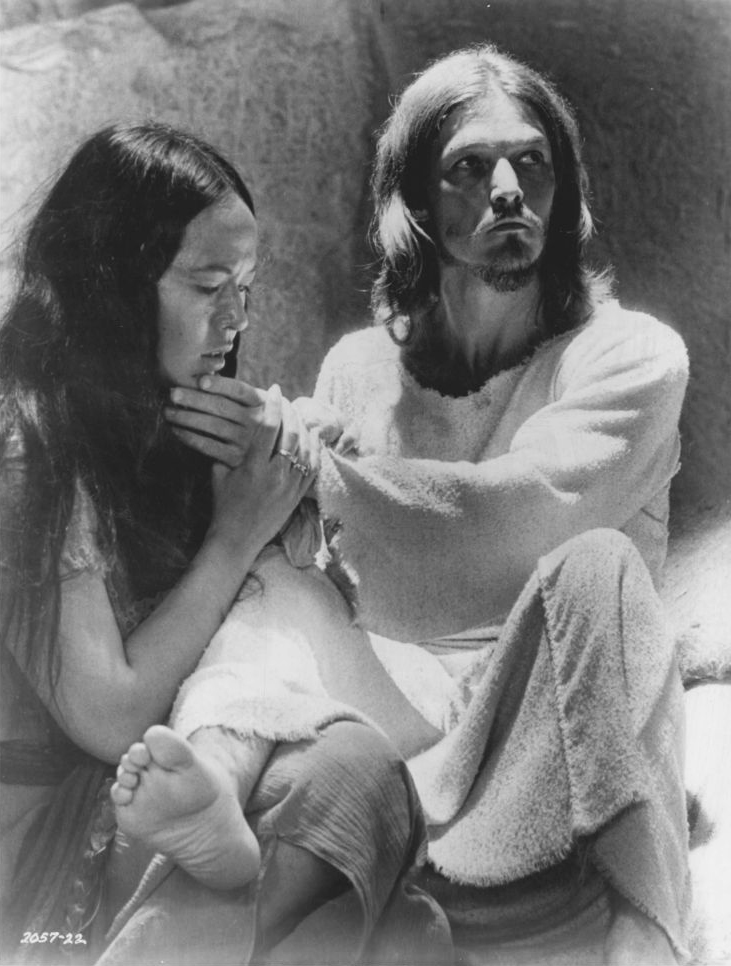
Yvonne Elliman (Mary Magdalene) and Ted Neeley (Jesus) in "Jesus Christ Superstar"

Yvonne Elliman (Mary Magdalene) and Ted Neeley (Jesus) in “Jesus Christ Superstar”

I’m not a Catholic, so once again this was a great learning experience (and for any Catholics who may read this, mea culpa in advance for anything I get wrong! I never went to Sunday school. Instead I got most of my religious education from Andrew Lloyd Webber: “Jesus Christ Superstar,” “Joseph and the Amazing Technicolor Dreamcoat”—religion seems to me a strange thing, mystifying).
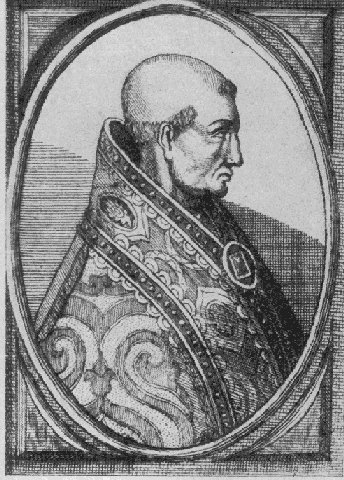
Pope Urban IV

Pope Urban IV

So back to what I learned on this search (and sadly, Gian Lorenzo Bernini, my 400-year-old boyfriend, doesn’t have much to do with Orvieto, so he doesn’t really figure in this search): Pope Urban IV established Corpus Domini as a holiday to encourage commemoration of the Eucharist, established at the Last Supper, when Jesus reportedly consecrated bread and wine and gave them to his disciples, saying, “this is my body,” and “this is my blood,” and urged his followers to repeat the rite in his memory.

Pope Urban hoped the new holiday would stanch some of the “heretical” movements at the time and reinvigorate deference for the Eucharist.
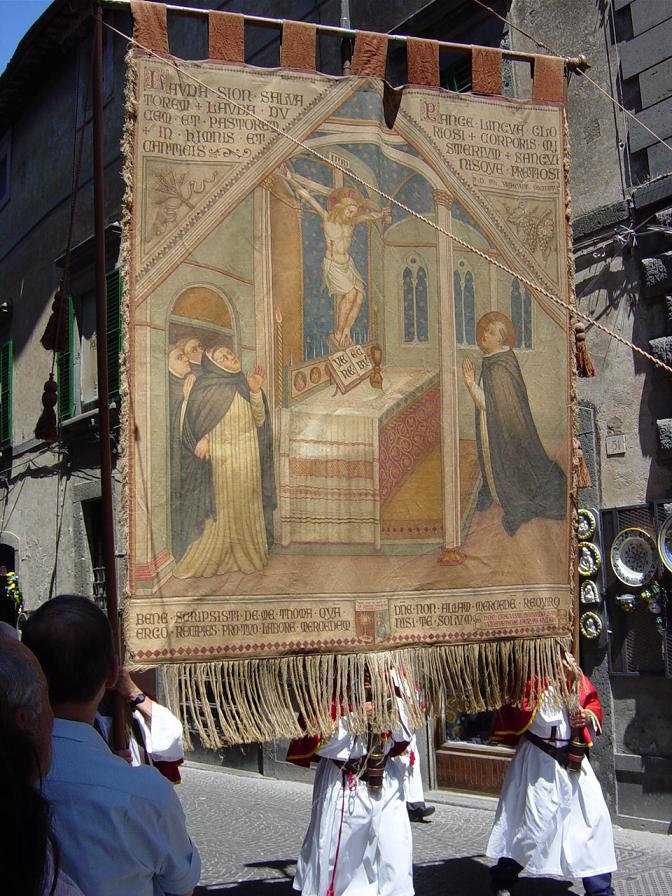
A tapestry depicting the Miracle of Bolsena

A tapestry depicting the Miracle of Bolsena

This year, 2013, marked the 750th anniversary of the Miracle of Bolsena, which seems to have prompted Pope Urban’s idea to create the new holiday. The miracle occurred in 1263, when a doubting priest, while celebrating Mass in Bolsena, looked down and found his hands covered in blood. The blood had begun to drip from a consecrated statue of Jesus. The parishioners delivered a cloth used to collect the blood to Pope Urban in Orvieto, who absolved the shaken (and presumably now-committed) priest.

(The journey of the cloth from Bolsena to Orvieto is recalled with a midnight walk during Corpus Domini, which my friend and newly minted Orvietana, Toni DeBella, completed this year. All six hours of it. In the pouring rain and through muddy forests in the pitch black. Arriving around 6 a.m.—for Mass. You can check out her story about it on Italian Notebook.)

And so, as part of Orvieto’s Corpus Domini procession, the holy cloth—which is kept safely protected in the duomo the other 364 days of the year—is accompanied through the town by a parade of citizens in jewel-toned costumes.

Men carrying holy candles and representing one of the quarters

Men carrying holy candles and representing one of Orvieto’s four quartiere

It’s a true living history event. With some dramatic entrances:
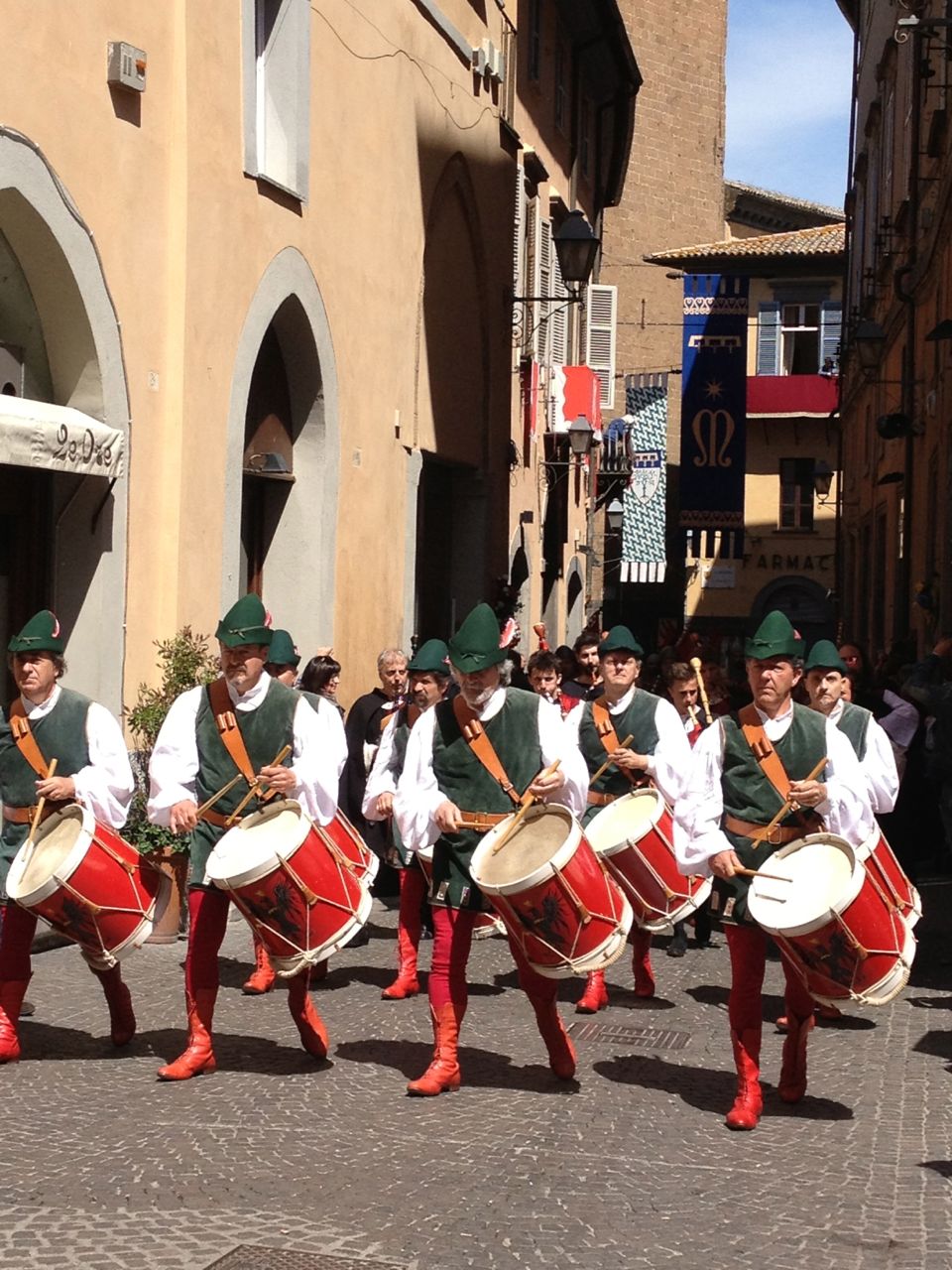
Insert your "Men in Tights" joke here.

Insert your “Men in Tights” joke here.

On Saturday afternoon, the festivities begin with the Corteo delle Dame e dei Popolani (Parade of Ladies and Peasants). They’re accompanied by drummers and the occasional bagpipe.

The women of Orvieto
Bagpipe players
Bagpipe players
Girls of all ages dress up

Orvieto was (and is) divided into four quarters—Corsica, Serancia, Olmo and Santa Maria della Stella—each represented by different flags (I don’t believe these below represent the four, but it gives you the idea).
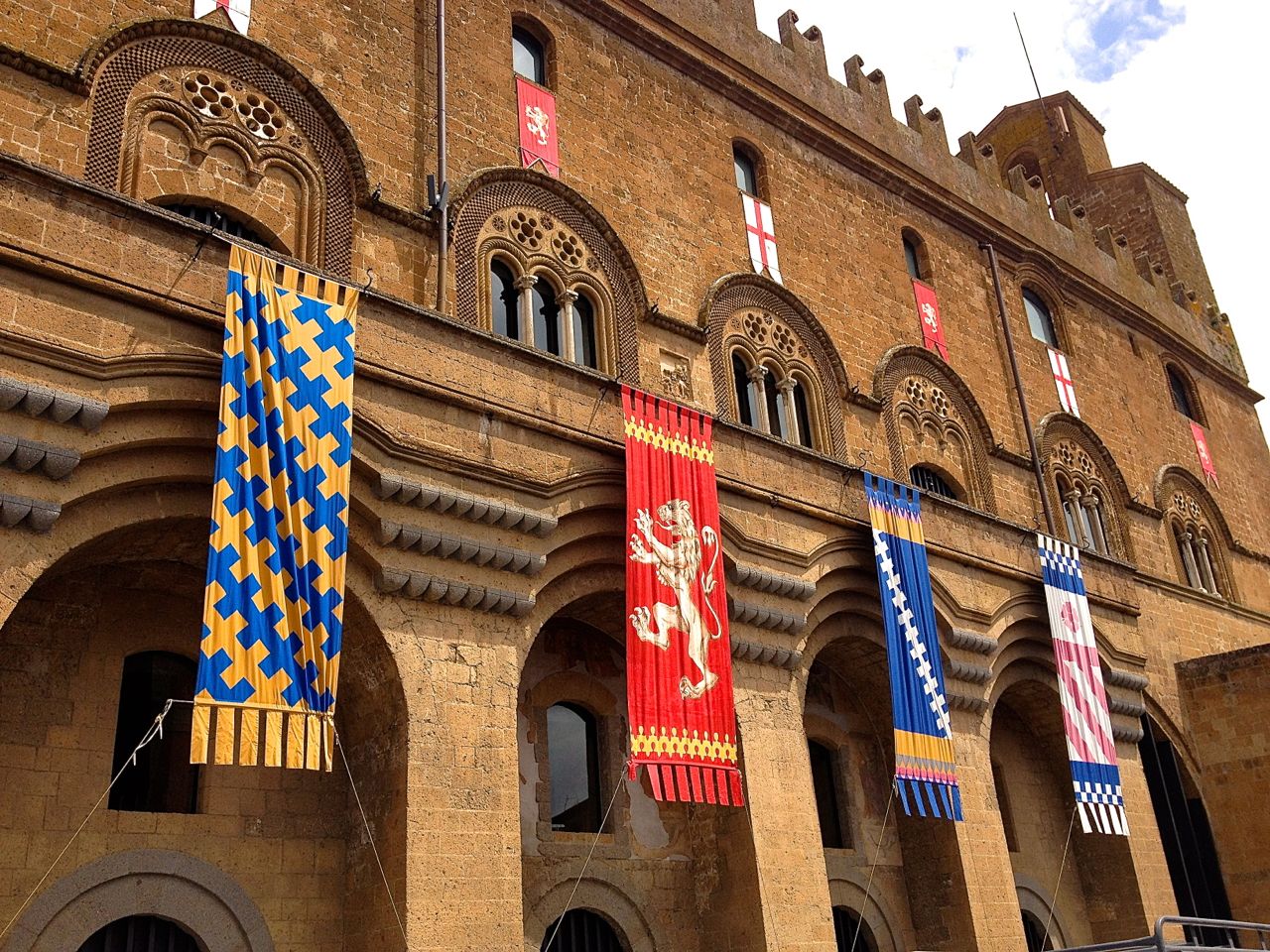
corpus flags

Flags in Orvieto

Unlike the Corteo delle Donne, which included some men, on Sunday, the parade consists exclusively of men (natch!). But some of them were just as pretty to look at.
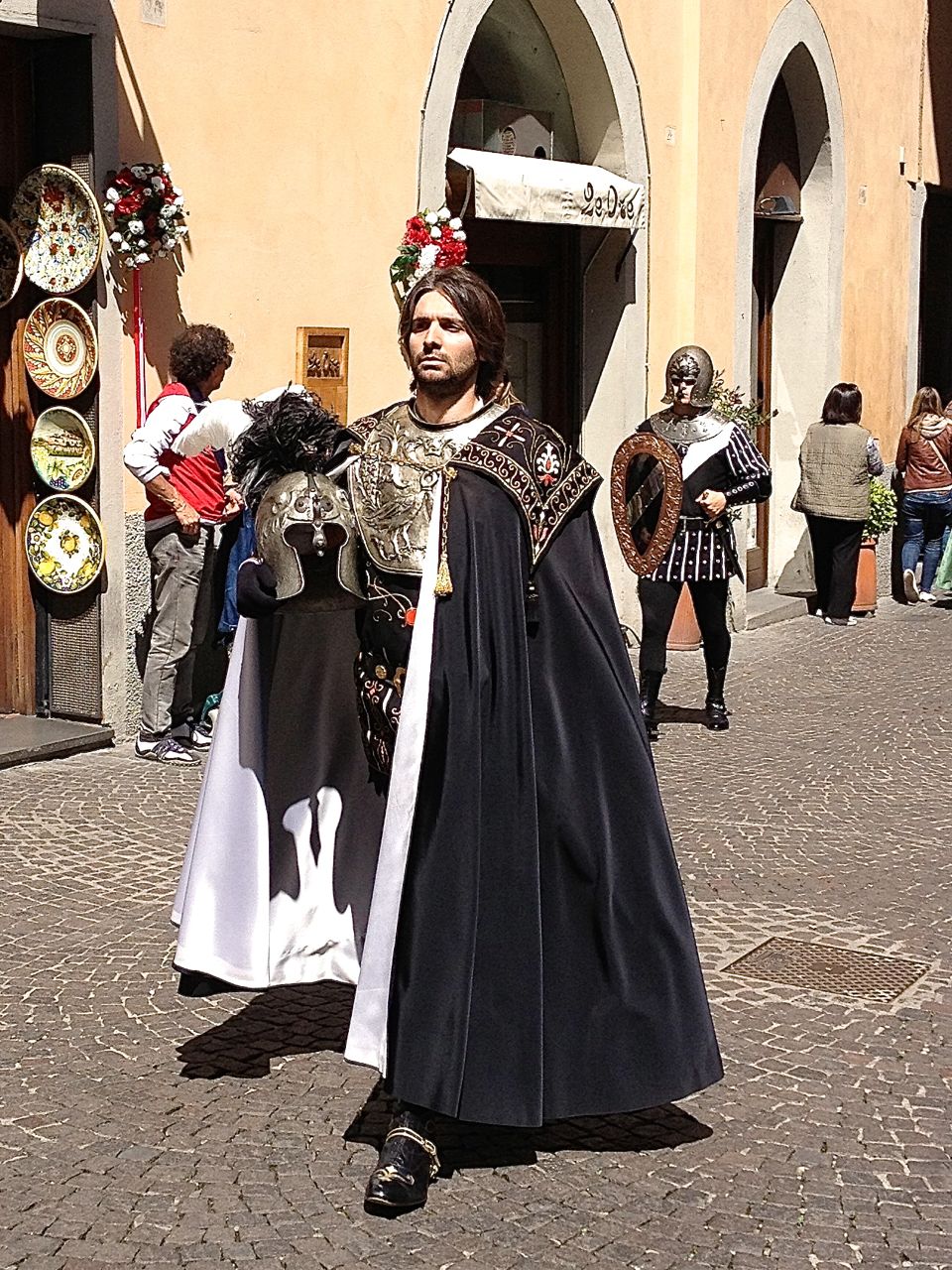
Ciao bello!

Ciao bello!

The procession includes representations of the municipal courts of the time, coats of arms and weapons of the noble families of Orvieto.

Men in helmets...
Men in helmets…
...and chain mail
…and chain mail

Also represented are the various guilds of the town, from barbers to ironworkers, bookmakers and vintners. They all have their own colorful banner.

Bookmakers' guild (I believe) in the center
Bookmakers’ guild (I believe) in the center
Vintners' guild (in green)
Vintners’ guild (in green)
Barbers' guild (right)
Barbers’ guild (right)

At the duomo, at the end of the day, priests ceremoniously return the sacred cloth for safekeeping—accompanied by a crowd of devoted citizens who form a candle-light parade inside the magnificent cathedral, while the impressive organ booms out notes from what I think is Handel’s “Messiah.”
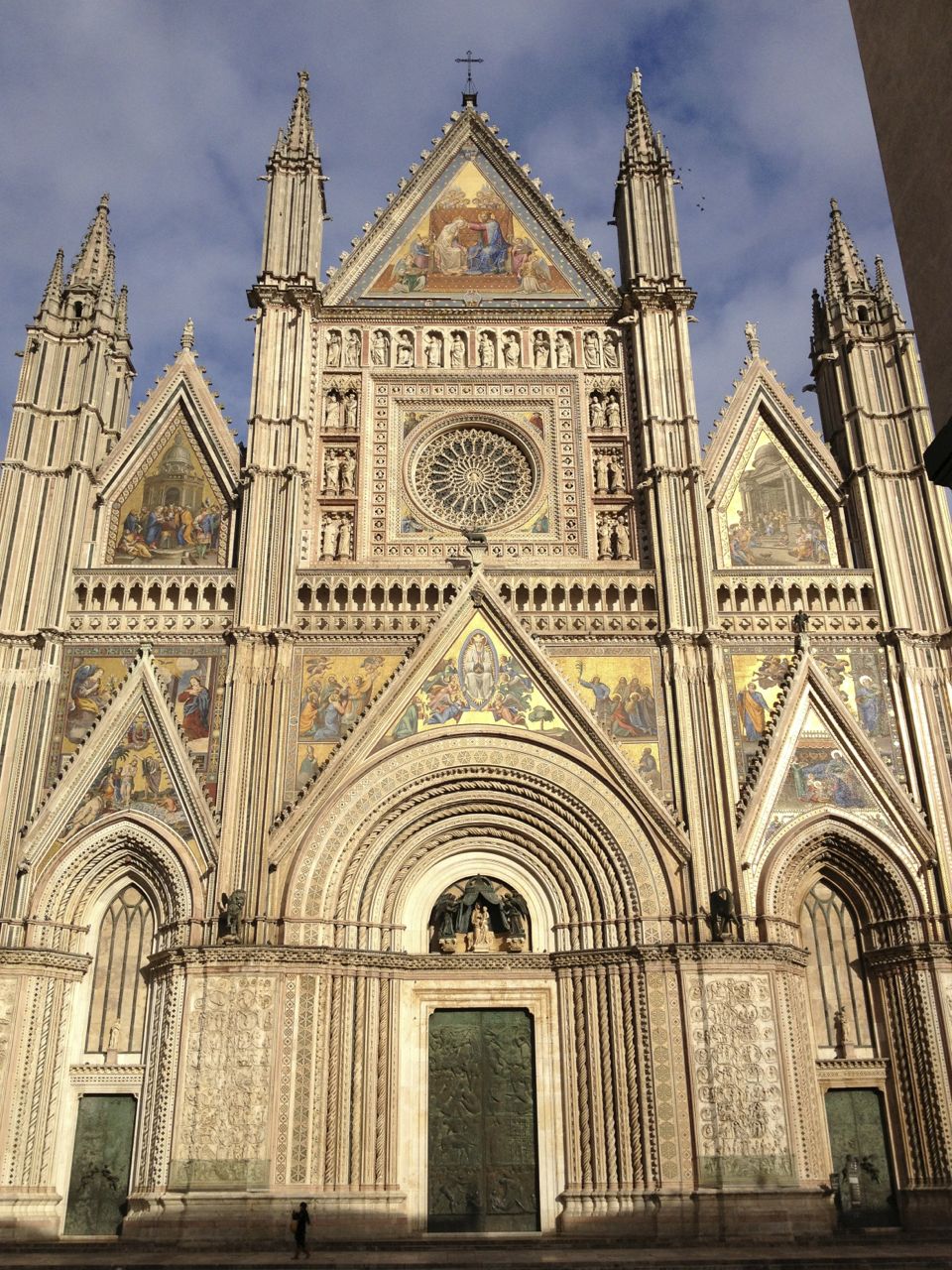
Orvieto duomo

Orvieto duomo

If you want to hear a tiny snippet of the organ music, click here! Ciao!
Share this:

  • Click to email a link to a friend (Opens in new window) Email
  • Click to share on X (Opens in new window) X
  • Click to share on Facebook (Opens in new window) Facebook
  • Click to share on LinkedIn (Opens in new window) LinkedIn
  • Click to share on Tumblr (Opens in new window) Tumblr
  • Click to print (Opens in new window) Print
  • Click to share on Pinterest (Opens in new window) Pinterest
Like Loading...

Paper-making In Rome

05 Wednesday Jun 2013

Posted by SearchingForBernini in Art, Art History, Bernini, History, Italian History, Italian Life, Uncategorized

≈ Leave a comment

Tags

Bernini, Florence, Gianlorenzo Bernini, Italy, Renaissance, Rome, Travel

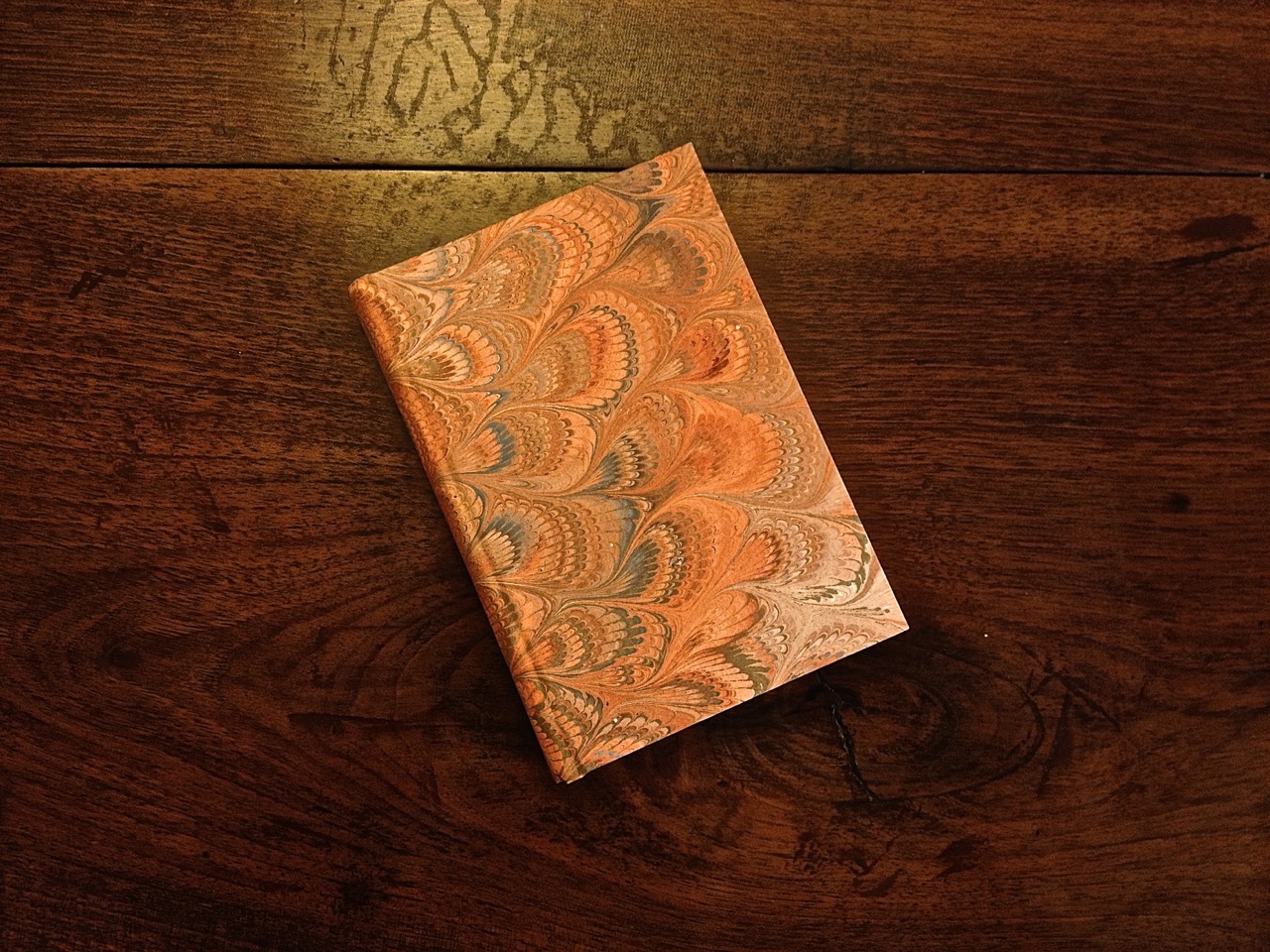
How To Judge A Book By Its Cover

diary

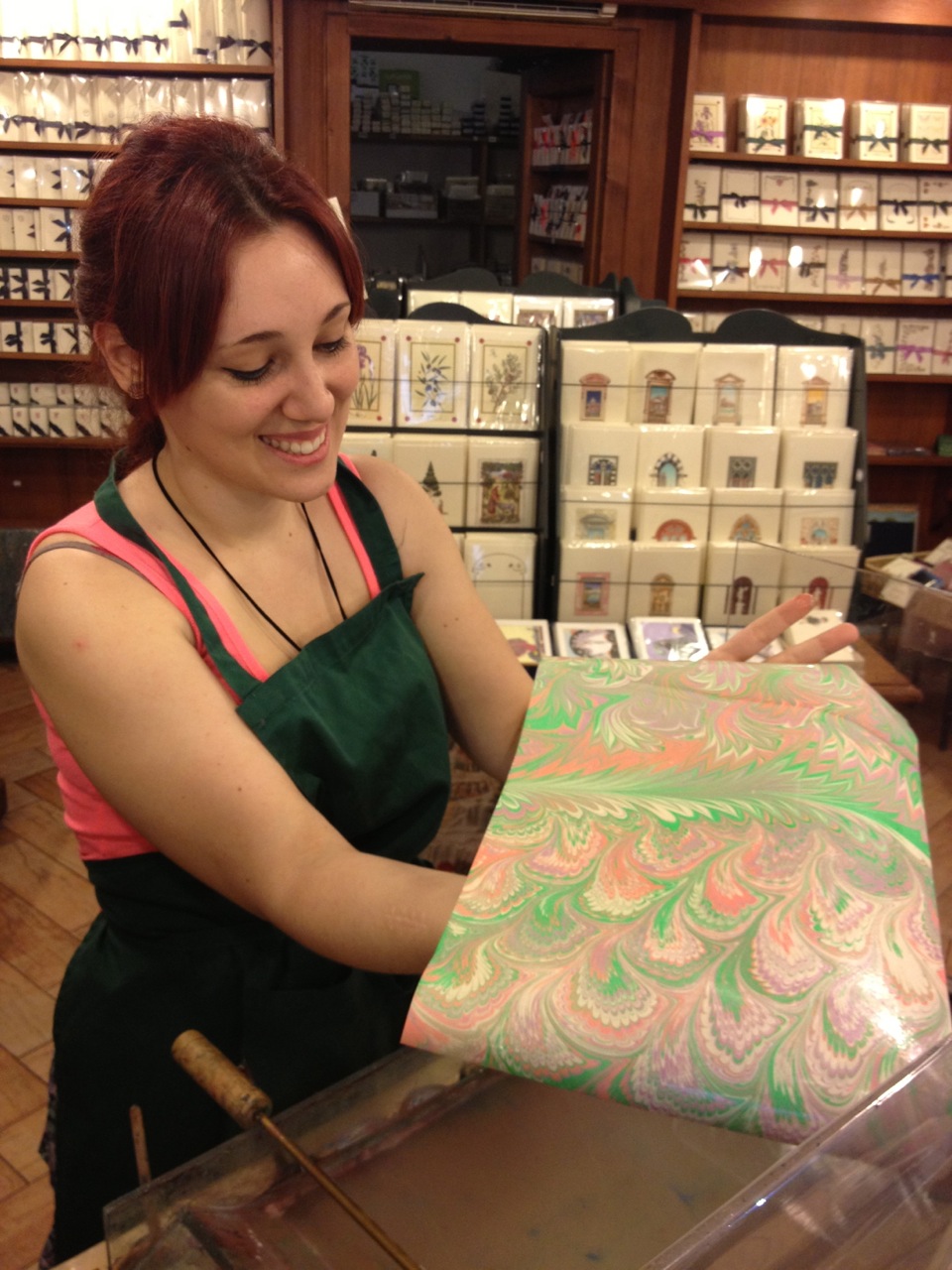
Did you ever wonder how that beautiful decorative Italian paper is created? No? Well, in all honesty, any curiosity I had didn’t keep me up at night either, but I am searching for new experiences and knowledge in Rome. So one day after Italian class recently I wandered into Il Papiro, a decorative paper and stationery store near Rome’s Pantheon that’s part of a chain originating in Florence. My friends and I were treated to an impromptu demonstration of how the gorgeous designs are made and preserved on paper.

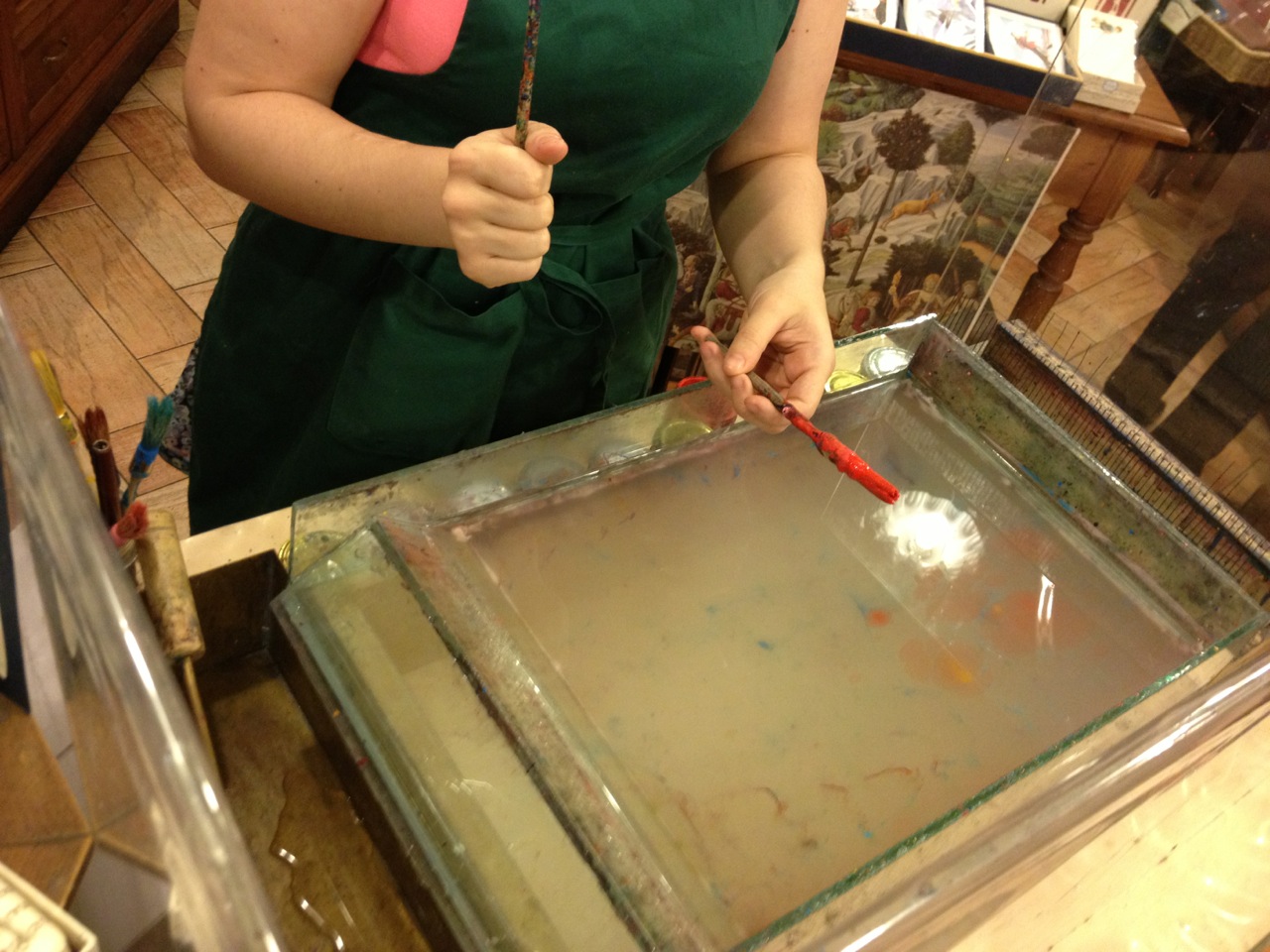
First, a thick gel is used. It’s like wallpaper glue, explained the woman giving the demonstration:

She starts with the glue-like gel as a base

She starts with the glue-like gel as a base

Then, she tapped the chosen colors of paint from a brush onto the glue so that it looked somewhat like a Jackson Pollock design in the making.

Tap the paint into the glue

Tap the paint into the glue

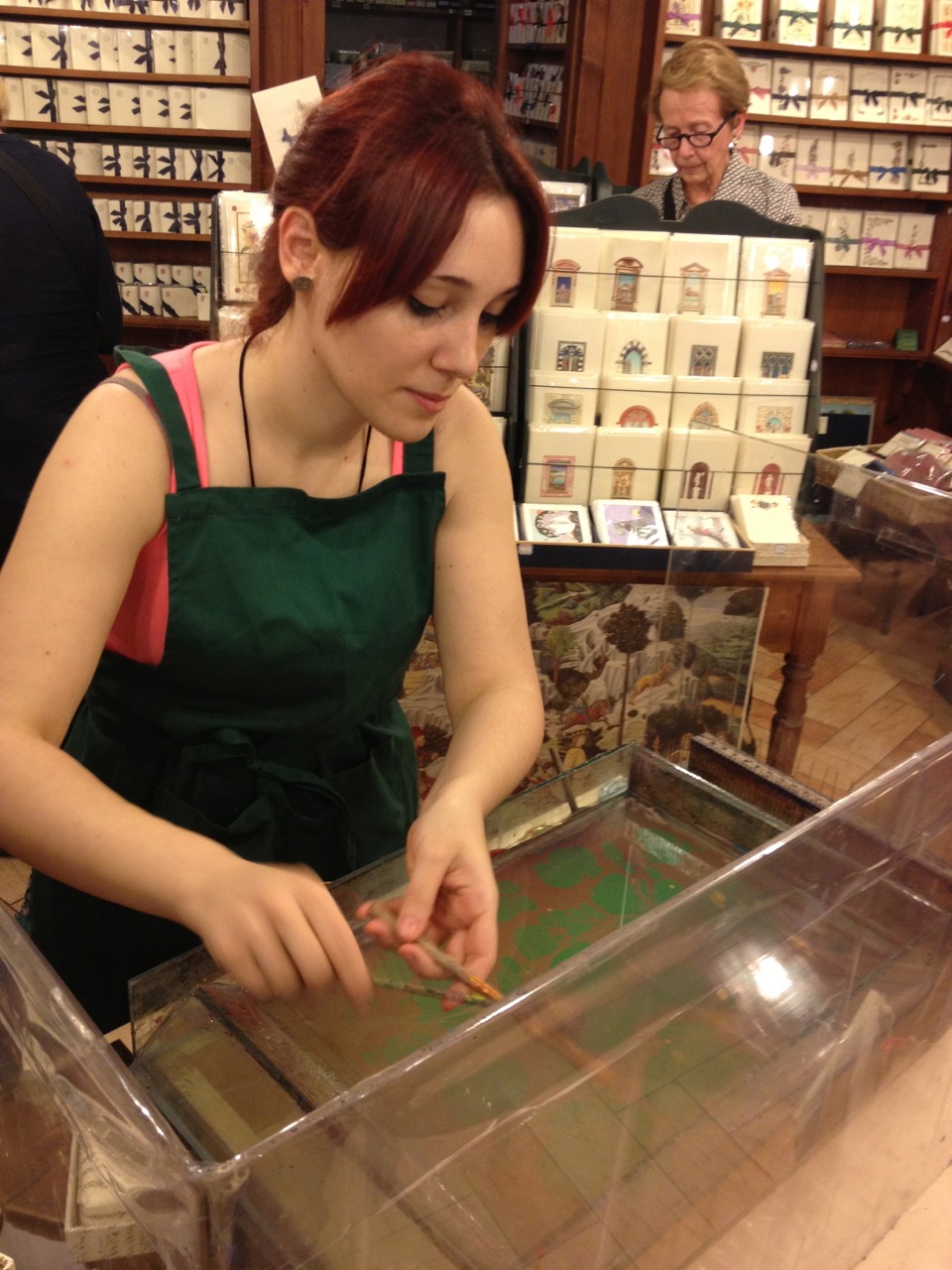
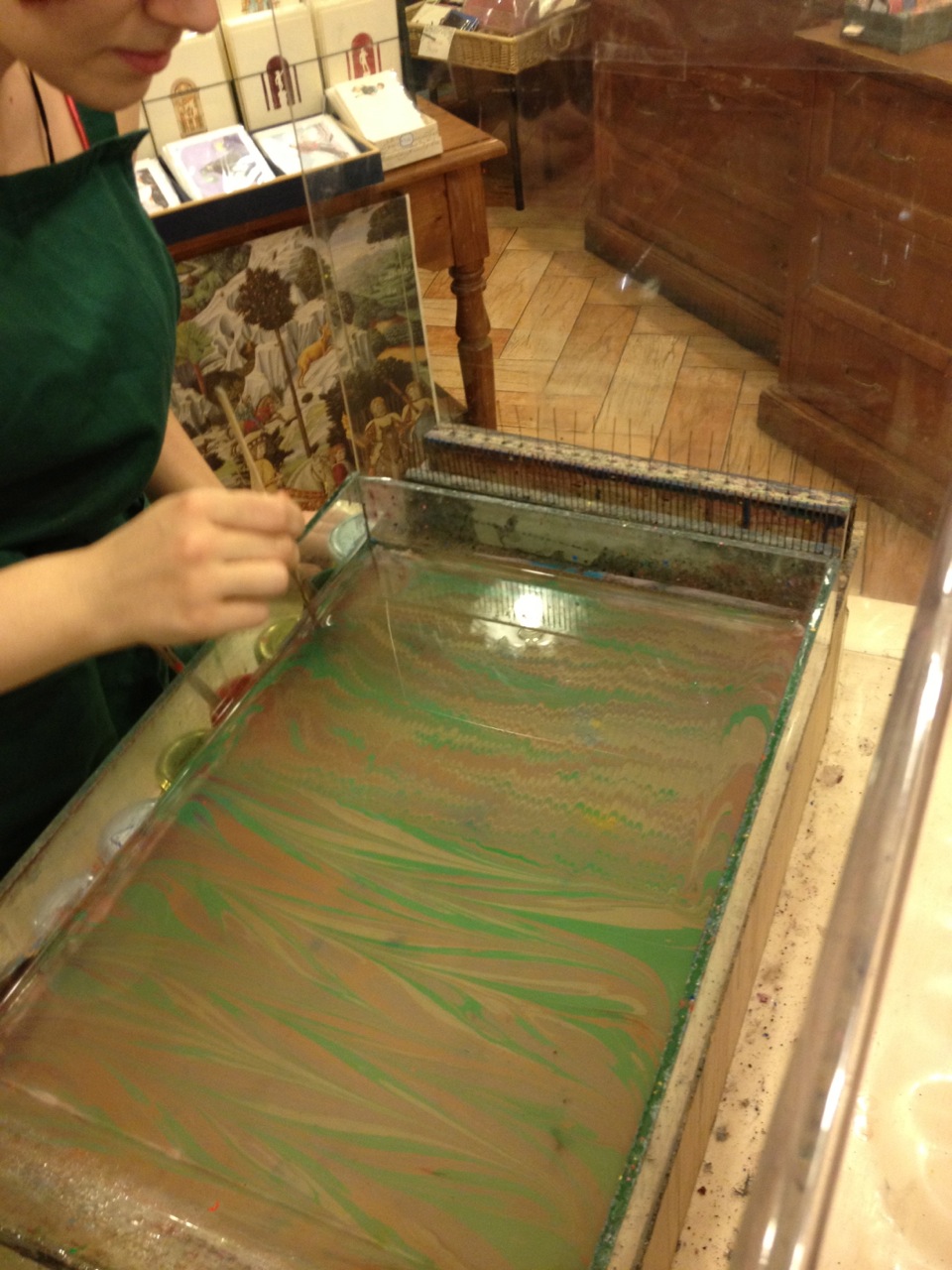
Once the desired colors were resting on the glue’s surface, she took the end of a brush and ran it gently in a zig-zag fashion through the glue so that the colors were evenly spread in lines but not blended all together.

Streaking the colors

Streaking the colors

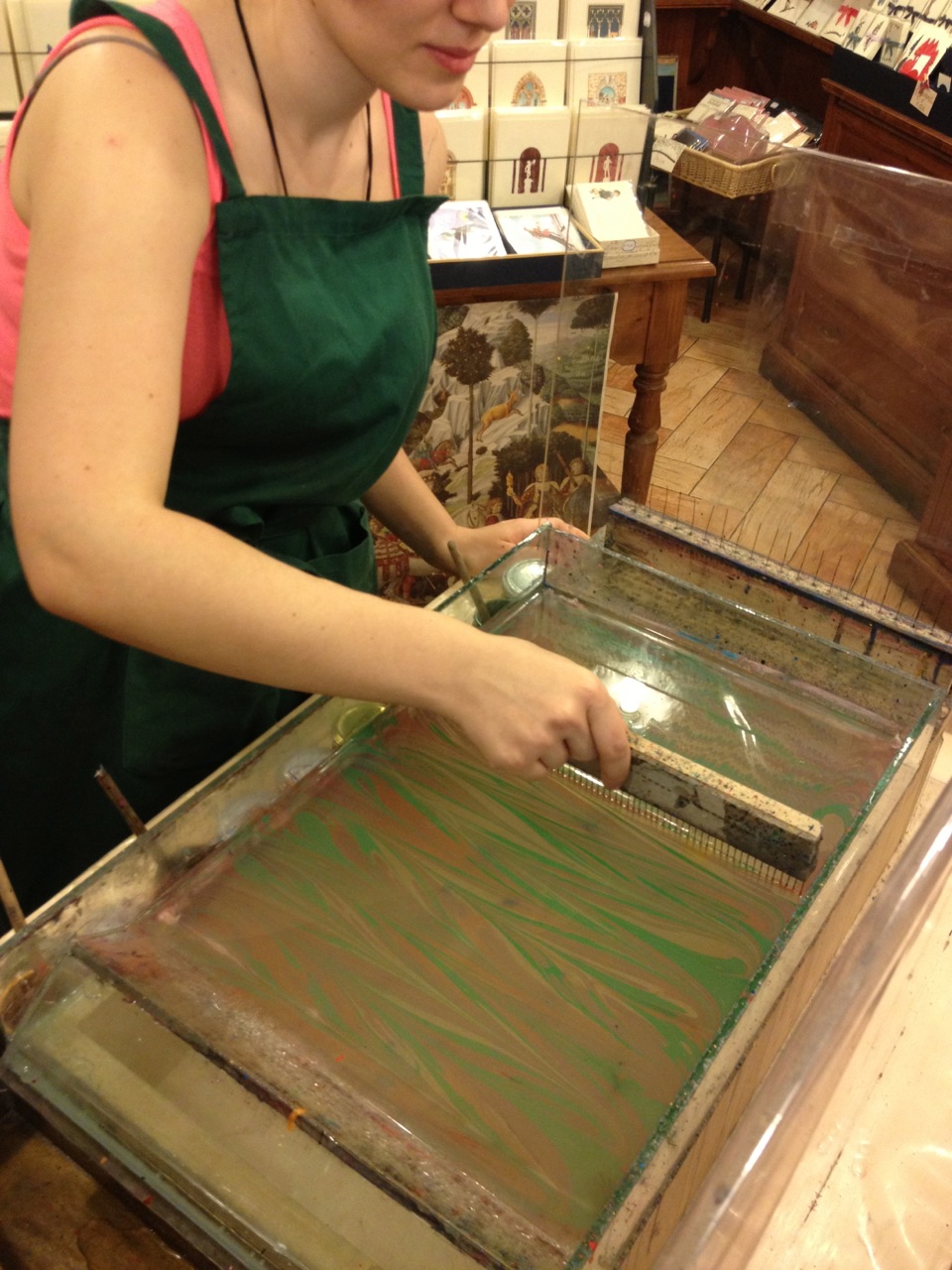
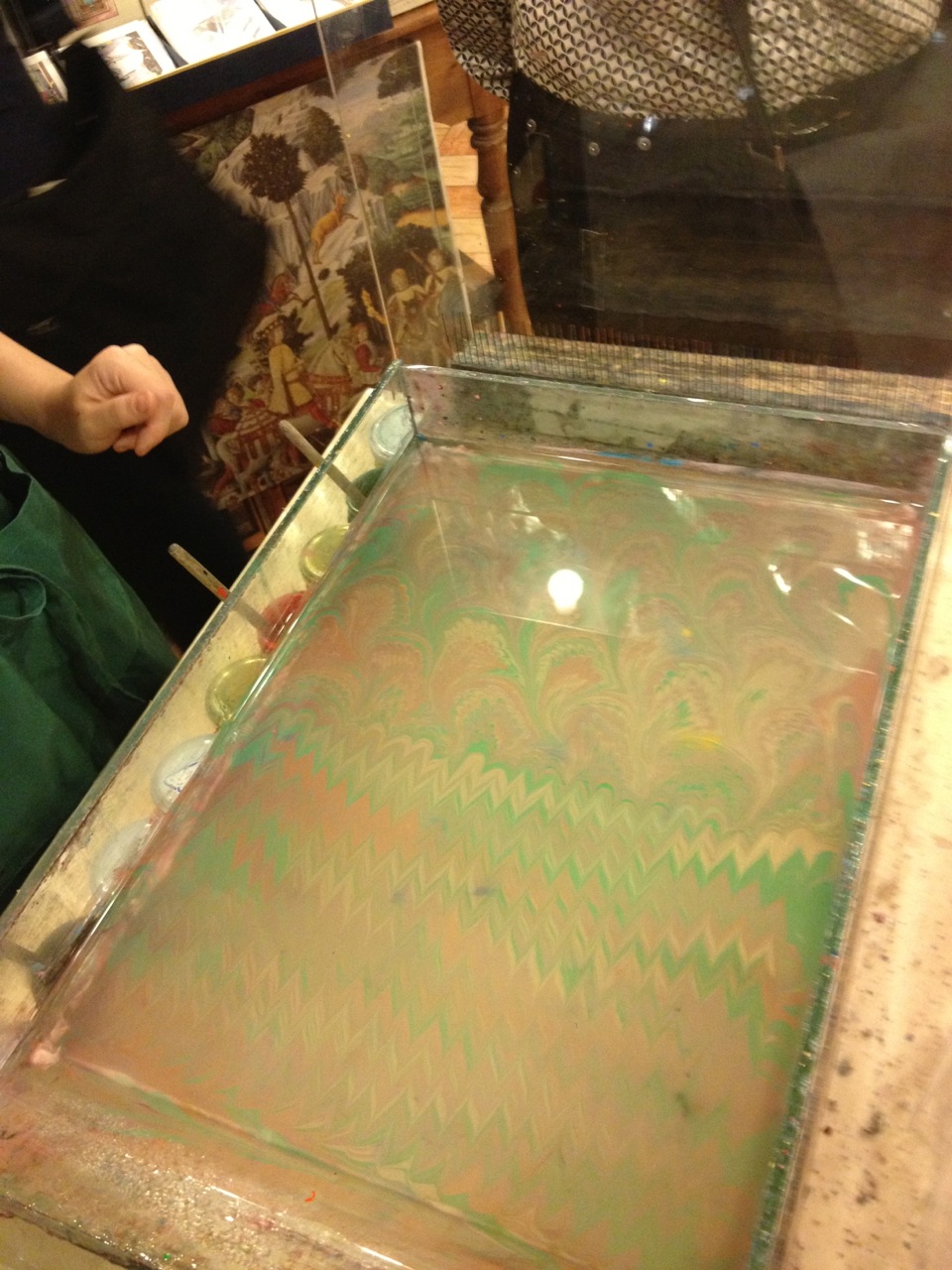
She wanted to show us different traditional patterns, so next she took a comb-like instrument and gently drew it across the paint.

Combing the colors

Combing the colors

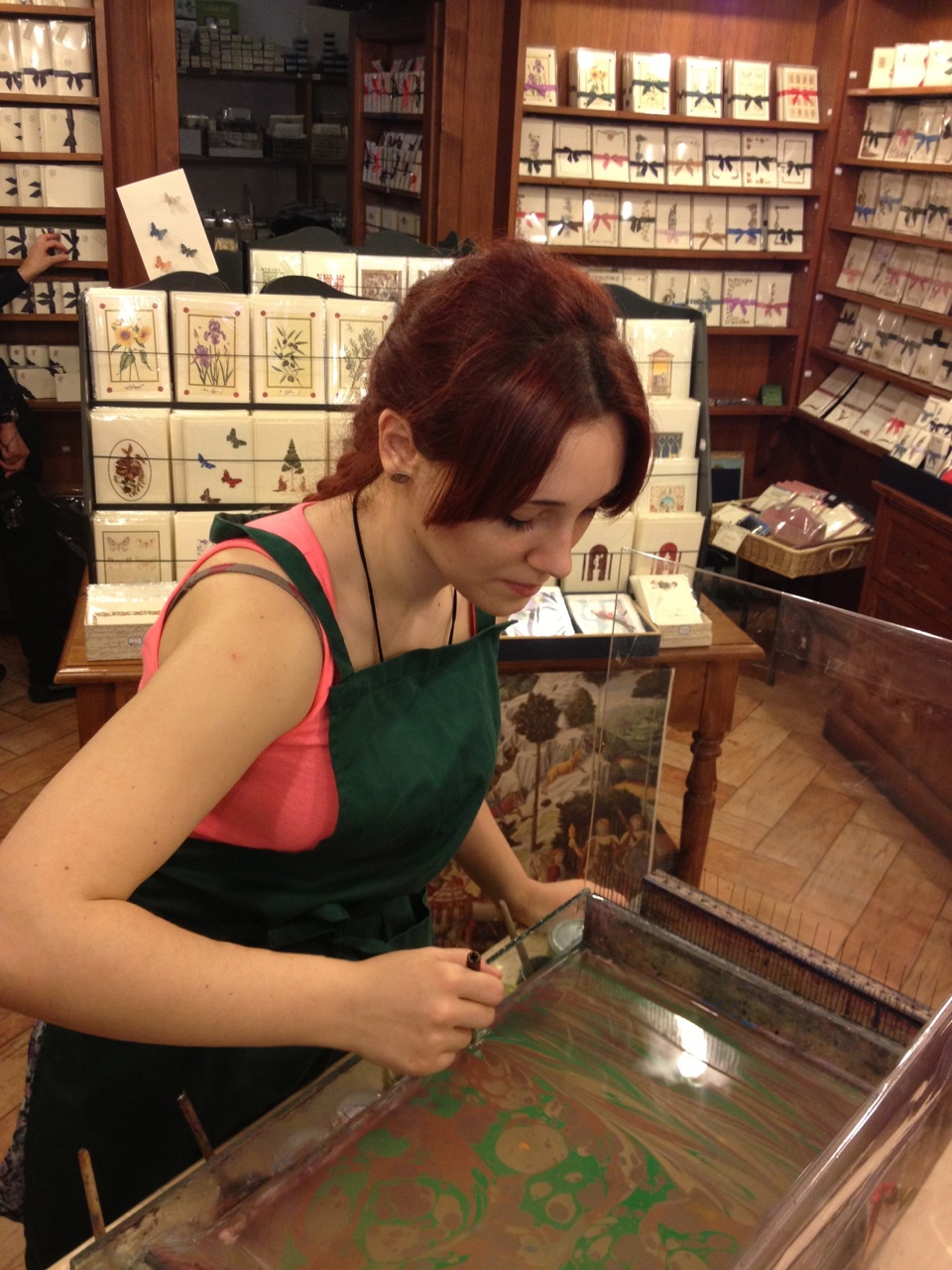
Again taking the pointy-end of a brush, she made some more finishing touches to perfect the shell design:

A shell game

A shell game

Almost ready for transfer to paper

Almost ready for transfer to paper

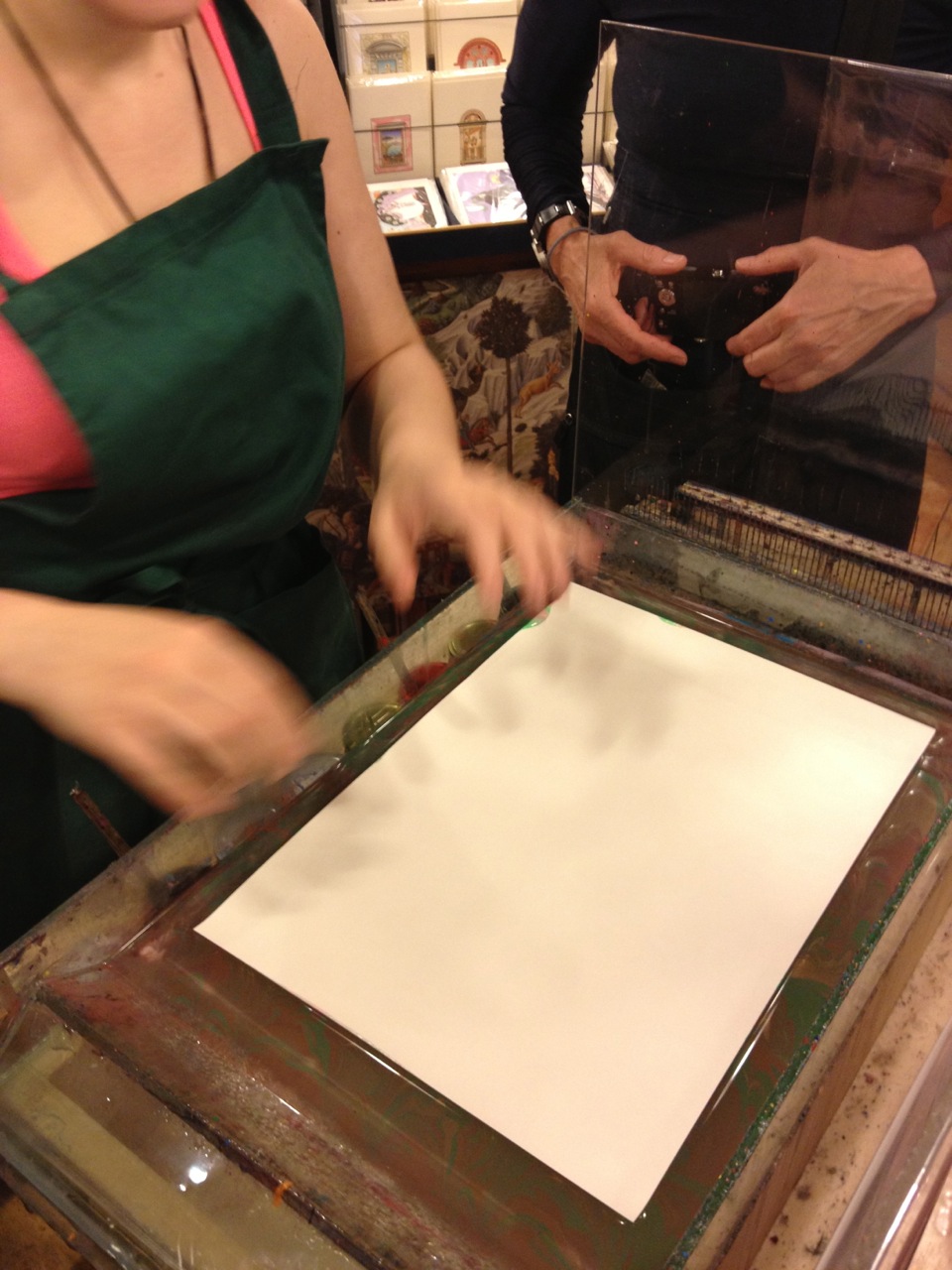
Next, she carefully laid a piece of stiff parchment on top of the glue and then oh-so-delicately dragged it along on top and out of the glue…

The paper lies on the glue for mere seconds

The paper lies on the glue for mere seconds

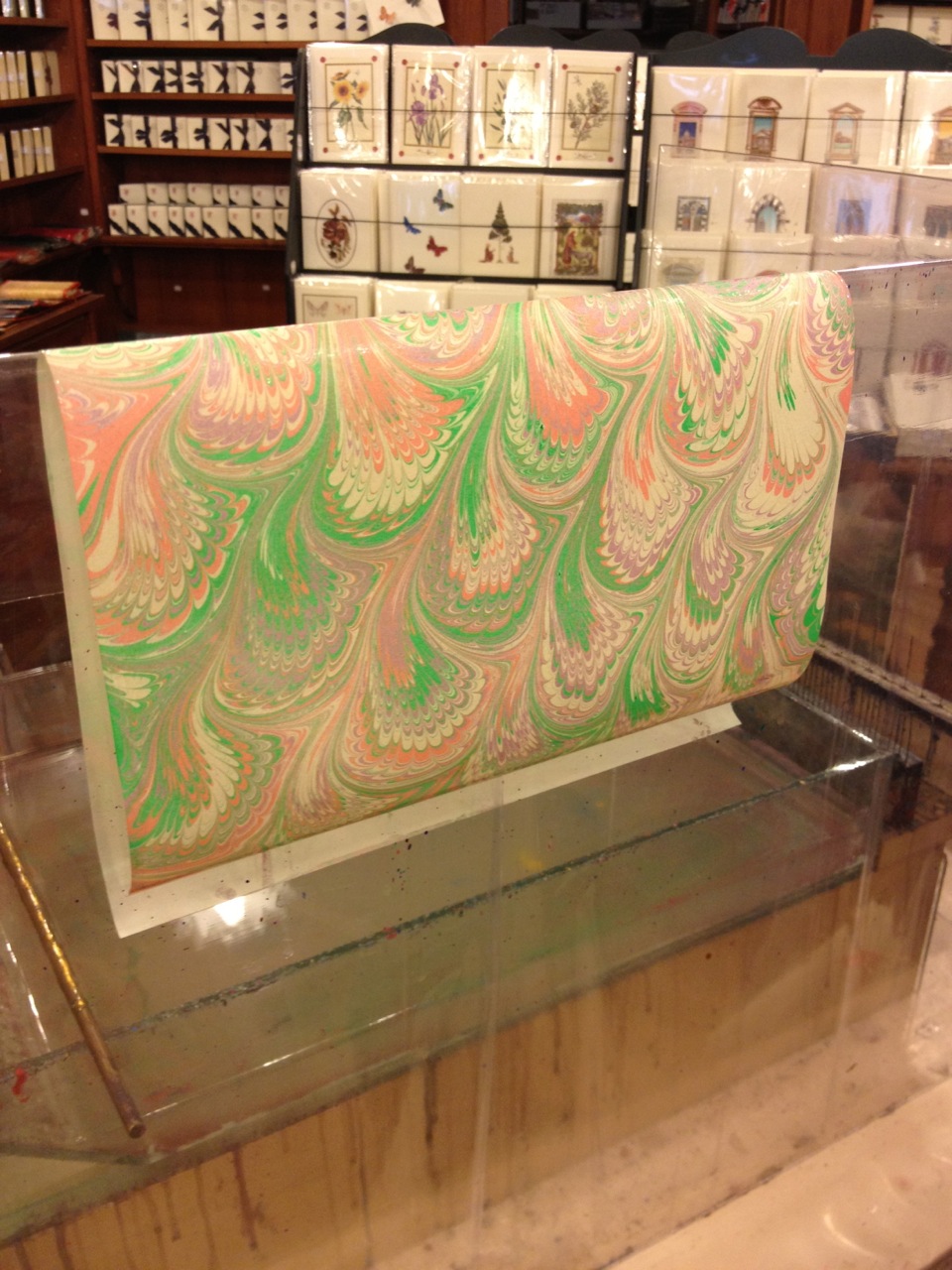
And eccola—it’s miraculous!

It takes about an hour or so for the paper to dry

It takes about an hour or so for the paper to dry

The finished product

The finished product

From some quick research, I’ve since learned that paper-making began to flourish in Italy in the middle ages, and grew into an industry in Florence and the surrounding territories. According to A Brief History of Paper, by Neathery Batsell Fuller (yes, that really is the author’s name!), the rich and powerful Fabriano family held a monopoly on paper making, to the extent that fines of 50 ducats (about $225 in todays dollars) were levied against those who tried to open factories within 50 miles of Fabriano buildings.

The marbling design of decorative paper originated in the Middle East but made its way to Europe around the time of the Renaissance, where the Italians developed their own flourishes. Many of the same traditions are still followed today.

Italians (and Europeans in general) fell so in love with the colorful designs they not only began using them in book binding but in lining trunks and shelves, wallpaper and much more. I’m keeping my Italian diary in an Italian paper-bound notebook: No matter how illegible my handwriting or mundane my thoughts are on the inside—it’s elegant and intriguing if you judge it solely by its cover. Ciao!

Share this:

  • Click to email a link to a friend (Opens in new window) Email
  • Click to share on X (Opens in new window) X
  • Click to share on Facebook (Opens in new window) Facebook
  • Click to share on LinkedIn (Opens in new window) LinkedIn
  • Click to share on Tumblr (Opens in new window) Tumblr
  • Click to print (Opens in new window) Print
  • Click to share on Pinterest (Opens in new window) Pinterest
Like Loading...
Newer posts →

Search

Recent Posts

  • Hot Lincoln
  • Rome for Cat Lovers
  • Happy Valentine’s Day…
  • Caravaggio’s Whores: The Courtesans of Rome Part II
  • Bernini’s Torrid Love Life

Recent Comments

SearchingForBernini's avatarSearchingForBernini on Sobbin’ Women: Sicilian…
Anna Marie's avatarAnna Marie on Sobbin’ Women: Sicilian…
The Art ofRheumatoid… on Caravaggio’s Whores: The…
Finding Treasure… on Caravaggio’s Whores: The…
Finding Treasure… on The Courtesans of Rome: Part…

Archives

  • March 2019
  • June 2016
  • February 2016
  • November 2015
  • October 2015
  • May 2015
  • April 2015
  • March 2015
  • November 2014
  • July 2013
  • June 2013
  • May 2013
  • April 2013

Topics

  • Art
  • Art History
  • Bernini
  • Book Reviews
  • Books
  • Caravaggio
  • Fun Facts
  • History
  • Italian History
  • Italian Life
  • Music
  • Orvieto
  • Politics
  • Restaurants
  • Rome
  • Sicily
  • Things I Love
  • travel
  • Uncategorized
  • Wine
  • women

Meta

  • Create account
  • Log in
  • Entries feed
  • Comments feed
  • WordPress.com
Follow Searching For Bernini on WordPress.com

Social

  • View search4bernini’s profile on Pinterest

Create a free website or blog at WordPress.com.

Privacy & Cookies: This site uses cookies. By continuing to use this website, you agree to their use.
To find out more, including how to control cookies, see here: Cookie Policy
  • Subscribe Subscribed
    • Searching For Bernini
    • Join 73 other subscribers
    • Already have a WordPress.com account? Log in now.
    • Searching For Bernini
    • Subscribe Subscribed
    • Sign up
    • Log in
    • Report this content
    • View site in Reader
    • Manage subscriptions
    • Collapse this bar
 

Loading Comments...
 

    %d